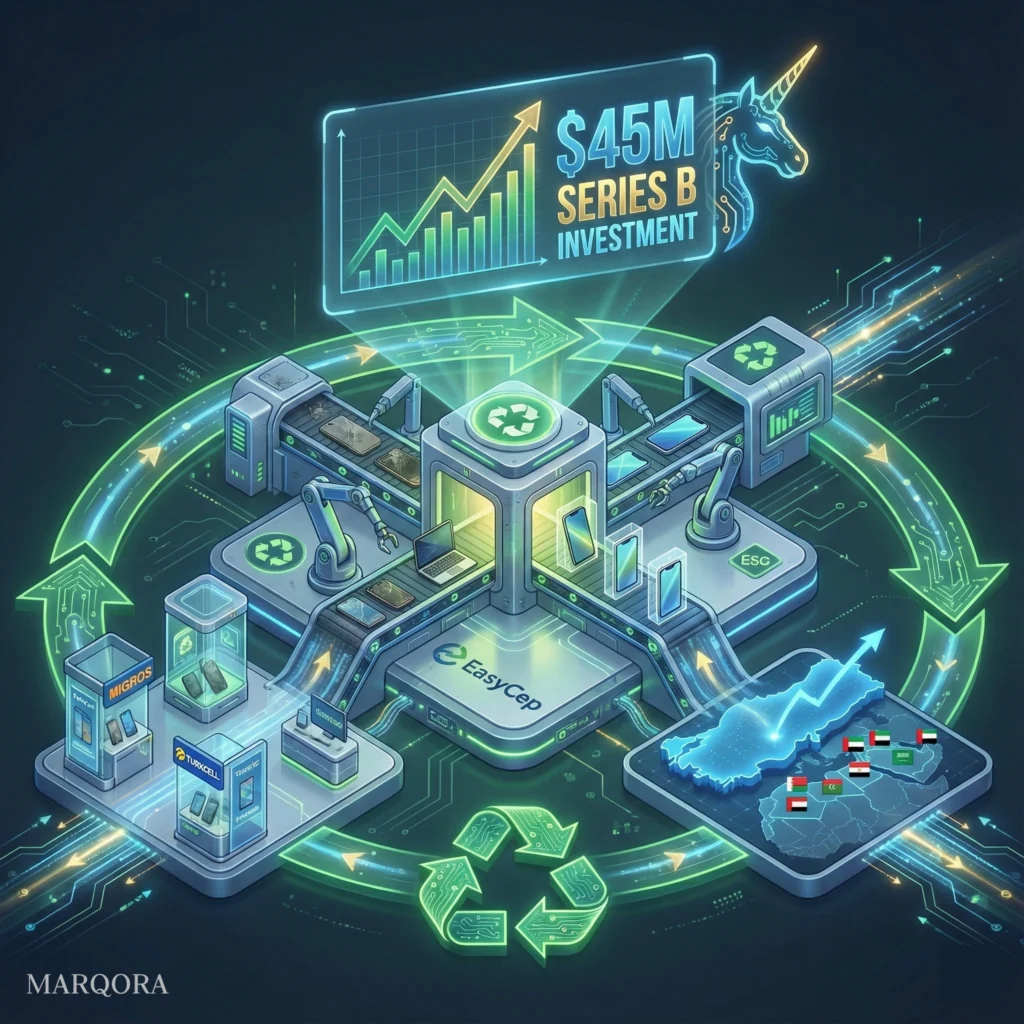
The Turkish technology ecosystem witnessed a historic turning point with the $45 million Series B investment round closed by EasyCep. This investment should be read not merely as a startup acquiring necessary capital, but as the proof of maturity for a new trading model—the “refurbished electronics” (recommerce) sector—emerging at the intersection of macroeconomic pressures, shifting consumer behaviors, and regulatory frameworks.
Turkey’s leading refurbished electronics marketplace, EasyCep, surpassed the $100 million valuation threshold in 2022 with its $11 million Series A investment, solidifying its position as a pioneer in the sector. Since then, the company has demonstrated sustained operational profitability, and with the completion of its $45 million Series B round, it is now making a strong transition from the “scale-up” phase toward becoming a unicorn. Consistently featured in the Deloitte Technology Fast 50 Turkey rankings for its steady growth, the company ranked 6th in 2024 with a remarkable 2,884% growth rate. Positioned at the very center of the circular economy and sustainable consumption trends, EasyCep has evolved into a powerhouse that integrates financial technologies with retail.
Founded in 2018 by two university friends, Mehmet Akif Özdemir and İsmail Dinçer, EasyCep continues on its path with sure and rapid steps, driven by its innovative business model and strategies, progressing towards becoming a success story that transcends Turkey’s borders.
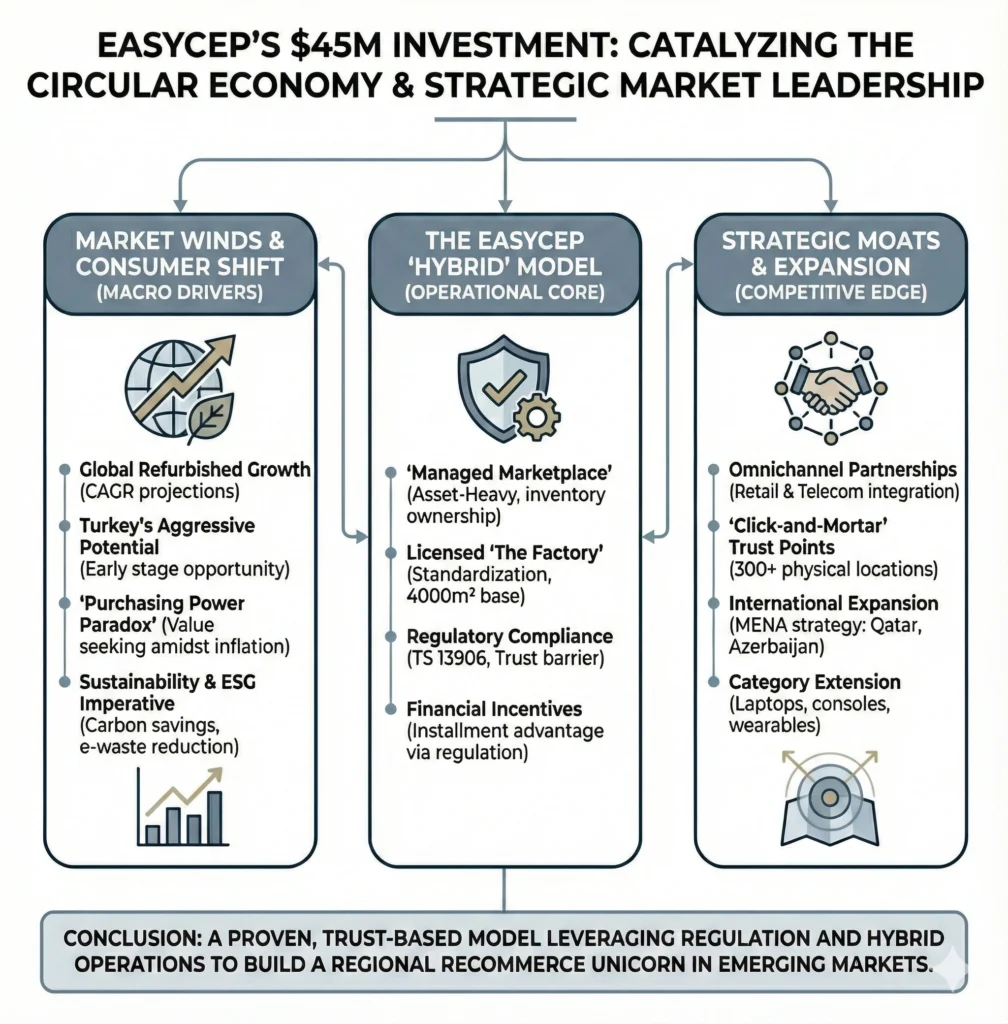
It is observed that EasyCep’s growth strategy is built upon three main pillars: (1) Financial solutions that protect consumer purchasing power in an inflationary environment, (2) Corporate trust provided through licensed refurbishment centers, and (3) Symbiotic partnerships established with retail and telecom giants (Migros, Turkcell).
1. Macroeconomic Conjuncture and Market Dynamics
1.1. Global and Local Market Size: Trends Beyond the Numbers
The refurbished smartphone market has transformed globally from a niche alternative into a mainstream retail category. According to McKinsey & Company analyses, an average growth of 10-15% is projected in the refurbished electronics segment.
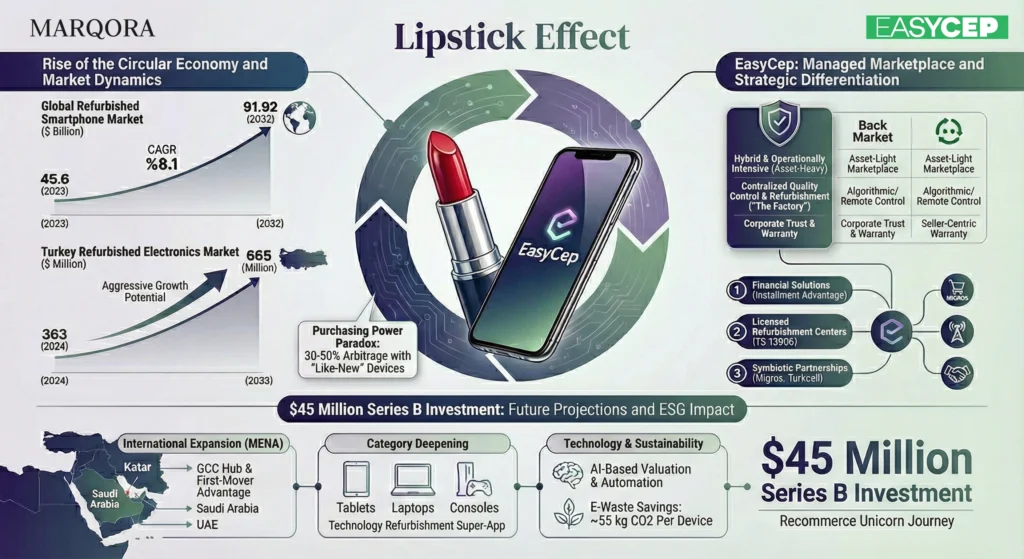
Research indicates that the global refurbished smartphone market will reach $91.92 billion by 2032, growing at a compound annual growth rate (CAGR) of 8.1% from its $45.6 billion level in 2023. This growth projection contrasted with the stagnation in new device sales, demonstrates that the market is experiencing a structural shift.
Specific to Turkey, market dynamics harbor a much more aggressive growth potential. As of 2024, the size of the Turkish refurbished electronics market is estimated at approximately $363 million, and this figure is expected to reach $665 million by 2033.
Considering that the total size of the Turkish smartphone market is $5.93 billion in 2024 and is expected to rise to $8.31 billion by 2030, the increasing share of the refurbished market within the total pie (compared to the 0.61% global share) proves that the sector has not yet reached saturation and holds “early stage” opportunities.
1.2. Inflationary Pressure and the “Purchasing Power Paradox”
In economic theory, the “Lipstick Effect” is defined as consumers turning to small luxuries while avoiding major expenditures during crisis periods. However, since smartphones have become a necessity of modern life, consumers cannot entirely avoid this spending. In Turkey, technology prices indexed to foreign currency exchange rates and high taxation have pushed the price of a flagship phone to multiples of the minimum wage. This situation has driven consumers towards a rational optimization: “How can I reduce costs without compromising on status and performance?”
EasyCep and similar platforms step in at precisely this point, creating an arbitrage opportunity by offering “like-new” devices at prices 30-50% lower. Especially in products that retain their value (low depreciation), such as the iPhone series, the refurbished market has become a mechanism (hedge) for consumers to protect themselves against inflation. This situation transforms EasyCep’s value proposition from a simple “second-hand sale” into a “financial accessibility tool.”
1.3. Sustainability and the ESG Wind
Although economic motivations are dominant in the Turkish market, ESG (Environmental, Social, and Governance) criteria are vitally important for global investors (such as Series B participants). Refurbishing and re-offering a smartphone for use minimizes carbon emissions originating from production, providing approximately 55 kg of CO2 savings.
While global players like Back Market build their brand identities on the “shame of buying new,” EasyCep localizes this narrative as a “Smart choice” and a “Contribution to the circular economy.” In an era where the global e-waste problem has reached massive proportions, investors evaluate EasyCep not only as an e-commerce site but also as a “climate-tech” instrument.
According to the United Nations’ Global E-waste Monitor 2024 report, 62 million tons of e-waste were produced worldwide in 2022 – an 82% increase compared to 2010 – and it is expected to reach 82 million tons in 2030.
Critically, only 22.3% of this e-waste was properly collected and recycled, meaning $62 billion worth of recoverable natural resources were lost.

2. Regulatory Framework: TS 13906 and the Institutionalization of “Trust”
The most critical factor distinguishing the Turkish market from other developing markets is the state’s proactive intervention in the sector. The TS 13906 standard, put into effect by the Ministry of Trade and the Turkish Standards Institution (TSE), ended the “wild west” period of the market and established a “Regulatory Moat” for corporate players.
2.1. Operational Barriers Introduced by Standards
TS 13906 introduced strict entry barriers preventing an ordinary phone repairman from operating as a “Refurbishment Center”:
- Personnel Competence: Technical personnel working in refurbishment centers are required to hold a “Level 4” vocational qualification certificate approved by the Vocational Qualifications Authority (MYK).
- Mechanical and Software Standards: Spare parts used must be TSE-approved or comply with manufacturer standards, and data erasure processes must be performed with certified software and be traceable.
- Spatial Requirements: Facilities must meet specific square footage requirements, have anti-static flooring, and possess security protocols.
2.2. Incentive Mechanism: Installment Advantage
The state established a strong financial incentive mechanism to reward firms that comply with these high standards. While the Banking Regulation and Supervision Agency (BDDK) restricts the number of installments on new mobile phones based on price (usually 3 installments or none at all), it allowed installment options of up to 12 months for refurbished products. This regulation enabled EasyCep to integrate with financial technologies (fintech) and created a “cash flow management” advantage in the eyes of the consumer. The lack of installment options via credit cards in the unregistered second-hand market is the greatest leverage protecting EasyCep from unfair competition and supporting its corporate structure.
3. Business Model Analysis: Asset Management and Operational Strategy
Success in the refurbished electronics market depends on a delicate balance between inventory management and operational efficiency. EasyCep’s model is positioned in a “Hybrid” and “Operationally Intensive” (Asset-Heavy) structure compared to its global competitors.
3.1. “Managed Marketplace” Approach While global competitor Back Market follows an “Asset-Light” model where it does not hold inventory itself and only connects buyers and sellers, EasyCep chose to take the inventory risk upon itself.
- Inventory Ownership: EasyCep buys the device from the consumer or business partners, records it on its balance sheet, refurbishes it, and sells it. This model requires high Working Capital. A significant portion of the $45 million investment will be used to finance this inventory cycle.
- Value Chain Control: Consumer sensitivity regarding “trust” in Turkey makes it difficult for the pure marketplace model (Back Market or eBay style) to grow. The consumer wants to see the corporate EasyCep brand as their counterpart, not “Ahmet Communication.” For this reason, EasyCep has centralized its quality control (QC), refurbishment, and logistics processes.
3.2. “The Factory”: 4000 Square Meter Refurbishment Base EasyCep’s operational heart is its 4,000-square-meter licensed refurbishment center. This facility, where over 650 employees are employed, is where Economies of Scale come into play.
- Standardization: Testing thousands of devices to the same standards is achieved through AI-supported diagnostic software. This minimizes human error and reduces return rates.
- Dynamic Pricing: EasyCep uses data analytics algorithms that predict how long a model will take to sell and how much profit it will yield. These algorithms determine purchasing prices instantly, ensuring margin optimization.
3.3. Revenue Model and Growth Figures
EasyCep proved it is in a hyper-growth phase by increasing its revenues 15-fold between 2021 and 2024. Its revenue model is based on the gross profit margin obtained from device sales. This margin is the difference between the purchase price, refurbishing cost (parts + labor), and the sale price. Compared to the 10-15% commission rates in the marketplace model, EasyCep’s model generates higher turnover (GMV = Revenue) but also has higher operational costs.
4. Global Competition Analysis: Strategic Comparison
To understand EasyCep’s position, a deep comparison with similar models worldwide is necessary. The following analysis summarizes the structural differences between EasyCep, Back Market, Swappa, and Refurbed.
EasyCep (Turkey) operates on a “Managed Marketplace & Stocked” business model. Crucially, this means EasyCep owns the inventory; it purchases and refurbishes the devices itself. In terms of quality control, it utilizes a centralized, physical approach within its own facility and offers a direct 12-month EasyCep warranty. Its primary revenue stream is the full revenue from product sales. The market dynamic in Turkey is focused on trust with installment advantages, and EasyCep maintains a significant physical presence with over 160 stores and points of sale.
In contrast, the France-based global player Back Market operates a “Pure Marketplace (Asset-Light)” model. It does not own stock; inventory belongs to third parties. Quality control is managed via algorithmic and remote seller scoring. Warranties of 12-24 months are provided by sellers but monitored by the platform. Revenue is generated through commissions (~10%) and seller subscriptions. Back Market’s dynamic is driven by price and variety, and it operates online only (excluding occasional experience stores).
The US-based Swappa functions as a “P2P (Peer-to-Peer) Marketplace.” Stock is held by individual sellers. Quality control relies on a moderation team performing checks like IMEI verification. Generally, no warranty is provided (relying on PayPal protection). Revenue comes from transaction fees. Swappa focuses on community and low commissions, operating purely online.
Finally, Refurbed, focusing on the DACH region, is a marketplace with a “Green Focus.” Inventory belongs to professional sellers, creating a vetted seller network. Sellers provide a 12-month warranty. Refurbed’s model is predominantly sustainability-focused and is online-only.
4.1. Back Market: “Asset-Light” Unicorn
Back Market is a model that dominates the sector without owning assets, much like Uber or Airbnb. Back Market reached a $5.7 billion valuation with a $510 million Series E in 2022. It offers massive inventory by gathering over 1700 refurbishment workshops onto a single platform. The “Buy Box” algorithm highlights the seller offering the best price/performance ratio. However, this model may experience difficulties in quality standardization; a phone from one seller may be perfect, while one from another may not meet expectations. EasyCep avoids this risk by gathering the entire process under its own roof.
4.2. Swappa: Safe Secondhand
Swappa is known for its “No junk” policy. Sellers are required to upload device photos with a verification code. Thanks to PayPal integration, it minimizes the risk of fraud. However, Swappa is not a refurbishment center; cosmetic flaws or battery health depend entirely on the seller’s declaration. EasyCep, on the other hand, moves product quality from “personal declaration” to “certified warranty” by refurbishing to industrial standards.
5. Strategic Partnerships and Omnichannel Distribution
The most striking element in EasyCep’s growth story is the integration it has established with Turkey’s giant retail and telecommunication structures. This strategy lowers customer acquisition costs (CAC) while simultaneously overcoming the trust issue through “brand transfer.”
5.1. Migros and CarrefourSA Collaborations: Transformation in Retail
While supermarket chains compete in low-margin food retailing, they have started offering a high-value-added service through the EasyCep collaboration.
- Trade-in Mechanism: Consumers can bring their old phones to the EasyCep stand or service point during grocery shopping and get an instant valuation.
- Gift Card Model: While cash payments can be received in exchange for the device, higher-value market gift cards are also offered. This model increases customer loyalty for Migros and CarrefourSA while creating thousands of “micro-supply points” for EasyCep.
- Sustainability Synergy: Corporate giants like Migros handle these collaborations in their sustainability reports as contributions to the “circular economy,” thus achieving ESG goals.
5.2. Turkcell Pasaj Integration: Operator Power
Turkcell Pasaj, as one of Turkey’s largest electronic marketplaces, is one of EasyCep’s most strategic sales channels.
- Payment Added to Bill: Turkcell offers its customers the option of installments added to their phone bills. Listing EasyCep products in this channel provides access to a broad audience that may have insufficient credit card limits or does not want to deal with bank loans.
- Corporate Approval: The sale of an EasyCep product in a Turkcell store or application reinforces the perception in the consumer’s mind that “If Turkcell vouches for this, it is reliable.” In sales made through Pasaj, EasyCep is in the supplier position, but the customer experience is under the Turkcell umbrella.
5.3. Physical Retailing: “Click-and-Mortar”
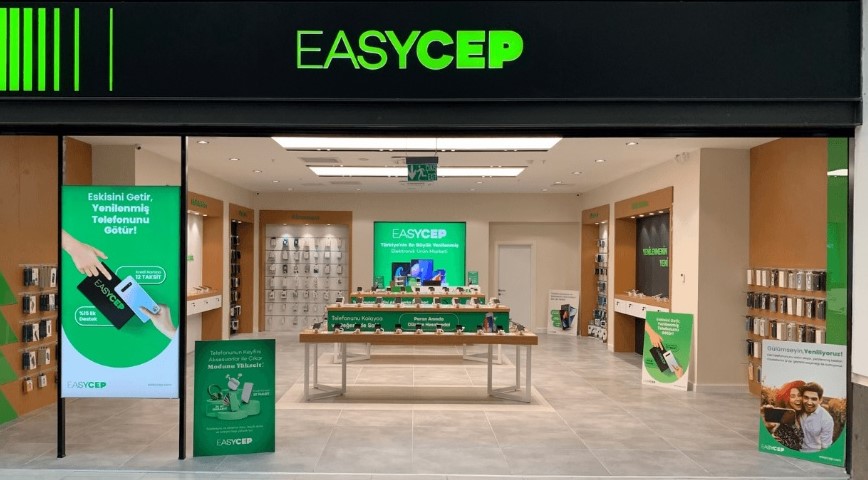
In the age of digitalization, EasyCep reaching over 300 physical points (stores and kiosks) may seem paradoxical. However, the culture of “seeing before buying” and “finding a contact person” is still very strong in Turkey. Physical stores serve three functions:
- Trust Point: The customer can hold and examine the refurbished product.
- Collection Center (Reverse Logistics): Customers prefer to bring their old phones to the store to sell them rather than shipping them. This increases supply velocity.
- Service Point: Support is provided for in-warranty operations or data transfer.
6. Use of Investment and Future Projections
The $45 million Series B investment provides the fuel that will transform EasyCep from a local leader into a regional game-changer. The growth strategy will deepen across three main axes:
6.1. International Expansion: Qatar-Centered MENA Strategy
EasyCep is exporting its operational excellence playbook from Turkey to the MENA (Middle East and North Africa) region, where consumer behavior patterns are similar and purchasing power is high.
- Qatar as the GCC Hub: Entering the Qatari market through strategic partnerships, EasyCep is positioning Qatar as its logistics and operational base for the Gulf countries. While tactically evaluating opportunities in Turkic Republics such as Azerbaijan, the core strategic focus is to capture the first-mover advantage in high-potential but under-regulated markets like Saudi Arabia and the UAE. The goal is to convert a significant portion of revenue into foreign-currency export income in the medium term.
6.2. Category Expansion
The company aims to become a “Super-App in the Technology Refurbishment Vertical” by strengthening inventory depth in its existing categories—tablets, computers, and gaming consoles. Beyond mobile devices, it will assume a market-maker role in home electronics and wearable technologies, thereby increasing the average order value (AOV).
6.3. Technological Infrastructure and Data Analytics
A portion of the investment will be allocated to technologies that will increase operational efficiency.
- AI-Based Valuation: Artificial intelligence models that analyze the cosmetic condition of the phone from photos.
- Automation: Use of robotic process automation (RPA) in the refurbishment center.
7. Conclusion and Forecasts
EasyCep’s $45 million investment is the most concrete proof that the concept of the “Refurbished Phone” has proven its maturity in Turkey. The company has created a strong defensive line (moat) against its competitors with the hybrid business model it developed, its strong operational infrastructure (TS 13906 compliant factory), and strategic partnerships (Migros, Turkcell).
While Back Market’s “Asset-Light” model is attractive to investors globally, in markets like Turkey prone to trust deficits and macroeconomic fluctuations, EasyCep’s “Managed Marketplace” model offers a more solid foundation in terms of sustainability and customer satisfaction. In the coming period, as EasyCep progresses on the path to becoming a regional “Recommerce Unicorn,” an increase in both local competitors (Getmobil, Senatech, etc.) and the intensified interest of global players in the market can be expected. However, EasyCep’s first-mover advantage and the physical/digital network it has established keep it one step ahead in this race.