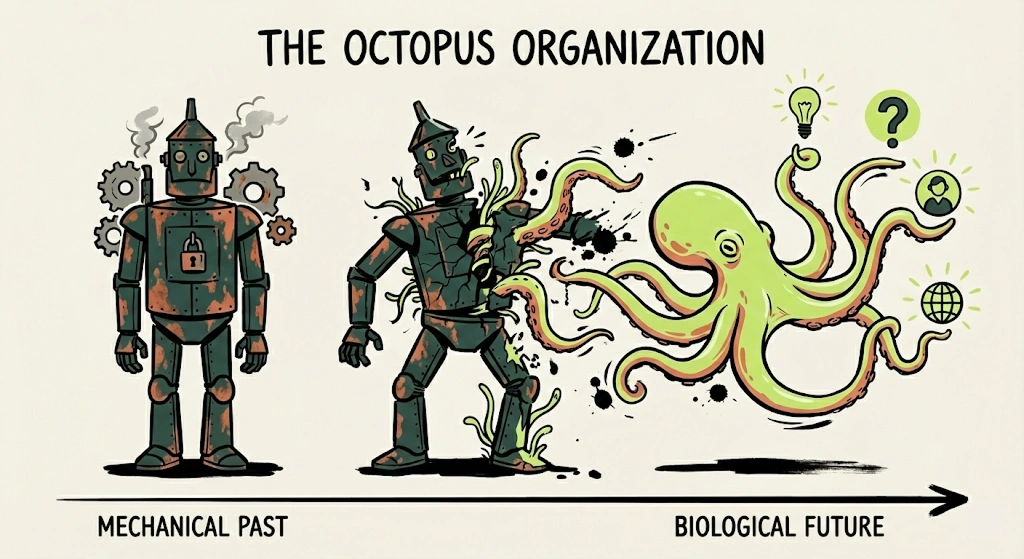
The modern business world is in the grip of a deep and silent crisis. This crisis is a far more fundamental, existential problem than falling profit margins or shrinking market shares. While organizations are built on 19th-century industrial paradigms, they are trying to survive in the hyper-connected, unpredictable reality of the 21st century possessing biological complexity. Jana Werner and Phil Le-Brun’s groundbreaking analysis reveals the radical mindset shift the business world needs by addressing this situation through the “Tin Man” and “Octopus” metaphors.
This article aims to map out the organizational transformation in the period we call the Great Rebuild Era. The central thesis of the study is this: The “machine” model (Tin Man), built on efficiency, control, and predictability, is now dysfunctional in today’s world dominated by complex systems. Instead, the “organism” model (Octopus), based on distributed intelligence, continuous adaptation, and relational depth, must be adopted.
The following sections include why the mechanistic management approach (Taylorism)—the legacy of the Industrial Revolution—has collapsed, the nature of complex systems, the anatomy of the Octopus Organization, and the strategic interventions required to realize this transformation. This is not just a management guide, but also an evolutionary examination of the origin of organizational species.
Part 1: The Historical Paradox: The Burden of Industrial Heritage
1.1. The Wizard of Oz Syndrome: Rusted Machines
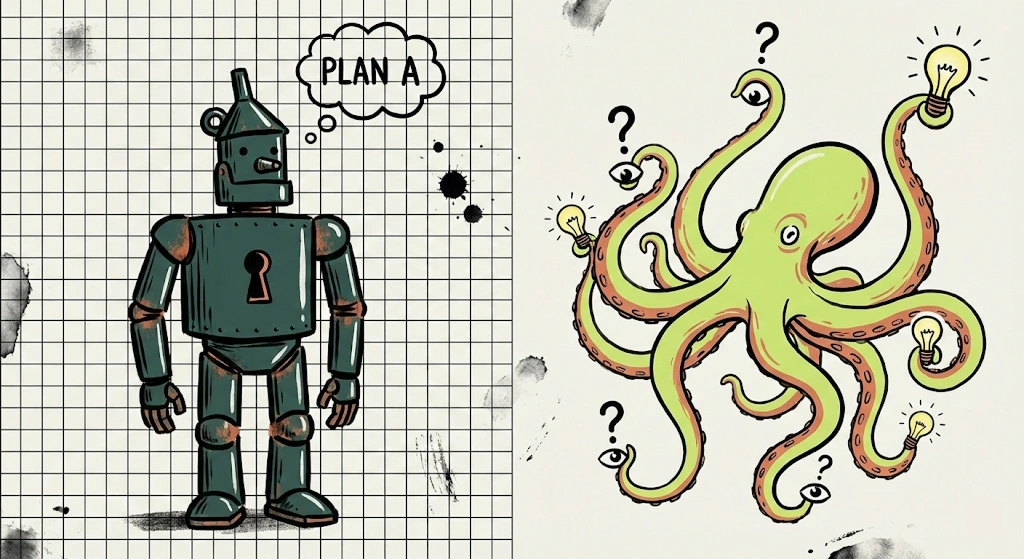
To understand the current state of the business world, we must first delve into the origins of the metaphors we use. Le-Brun and Werner liken most of today’s companies to the Tin Man in the “Wizard of Oz” fairy tale. The Tin Man is a machine that was once produced to be shiny, functional, and purposeful. However, when the heroes find him in the forest, he is rusted, stiff, and immobile. His only hope is an intervention from the outside, an oil can.
Today’s corporate landscape is filled with rusted Tin Men.
Rigidity: They are so strictly bound to procedures that they cannot move when customer demand changes.
Soullessness: These “heartless” structures have lost the ability to empathize and establish human connections.
External Dependency: To move, they constantly need “transformation projects,” consultants, or new technologies (oil cans) coming from the outside.
As Le-Brun and Werner point out, Tin Man organizations are optimized for the era of mass production, adherence to process, and top-down planning. However, they are floundering in a complex world where success depends on adapting and exploring.
1.2. Taylorism and the End of the Newtonian Universe
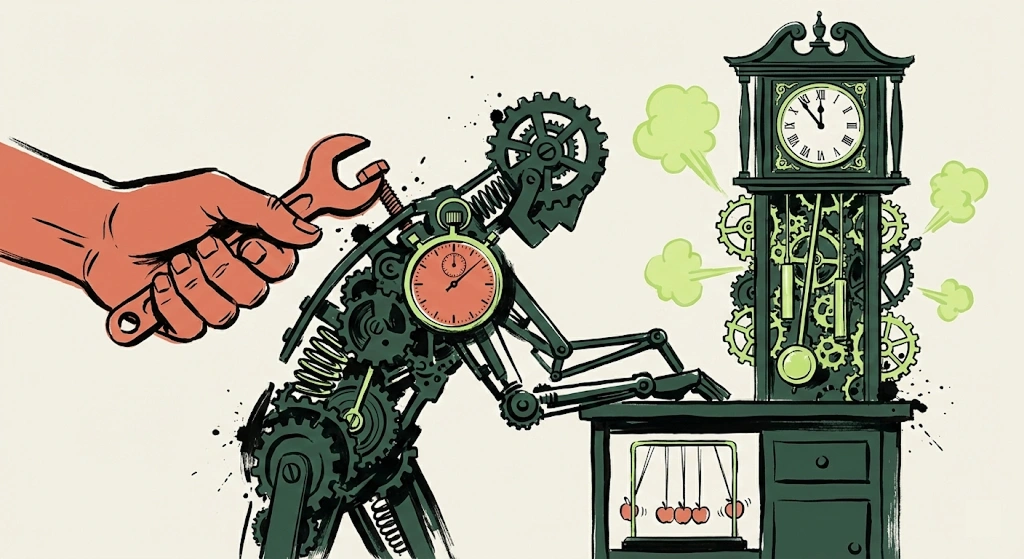
The architect of this mechanical structure is the “Scientific Management” (Taylorism) movement of the early 20th century. Frederick Winslow Taylor, by breaking work down into its smallest components, turned humans into cogs in a machine and sacralized efficiency. The worldview in this era was based on Newtonian physics: The universe was a giant clock with set rules, deterministic and predictable. If a gear of the clock (the company) broke, repairing or replacing it was sufficient.
However, this “Machine Age” paradigm relied on two fundamental assumptions:
The World is Complicated: Problems may be hard, but they can be analyzed and solved.
Change is Slow: Market conditions remain relatively stable within annual planning cycles.
Today, both of these assumptions have collapsed. We are now in the “Biological Age.” Digital networks, global supply chains, and social media have transformed the world from a Newtonian clock into a Darwinian forest. In this new age, survivors are not the strongest machines, but the organisms that adapt the fastest.
| Feature | Industrial Revolution (Machine Age) | Biological Age (Digital Age) |
| Basic Metaphor | Clock / Factory (Tin Man) | Neural Network / Octopus |
| Management Philosophy | Scientific Management (Taylorism) | Complexity Science (Complexity) |
| Human Resource | Replaceable Part (Resource) | Distributed Intelligence (Cell) |
| Success Metric | Efficiency and Scale | Adaptation and Speed |
| Perception of Change | A dangerous deviation | A natural process |
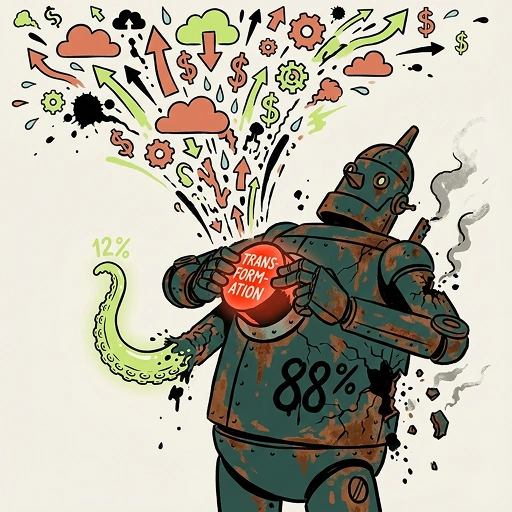
1.3. The Transformation Illusion: Why Does 88% Fail?
When Tin Man organizations feel they are rusting, they instinctively hit the “Transformation” button. Digital transformation, Agile transformation, cultural transformation… Billions of dollars and trillions of effort are spent. However, according to Le-Brun and Werner’s data, only 12% of these efforts provide sustainable performance gains after three years.
Why? Because these transformations try to make the machine a “better machine.” Faster spinning gears, shinier metal plates… But the problem is not the machine’s speed, it is the machine’s type. No matter how much you oil a Tin Man, it can never be as flexible, responsive, and intelligent as an Octopus. Transformation is not about changing “what is done” (doing), but about changing the “state of existence” (being).
Part 2: The Depths of Systems Theory: The Chasm Between Complicated and Complex
The intellectual foundation of the transition to the Octopus Organization lies in understanding the vital difference between “Complicated” and “Complex” systems. Although these two concepts are used interchangeably in daily language, in systems science, they represent opposing worlds.
2.1. Complicated Systems: The World of Blueprints
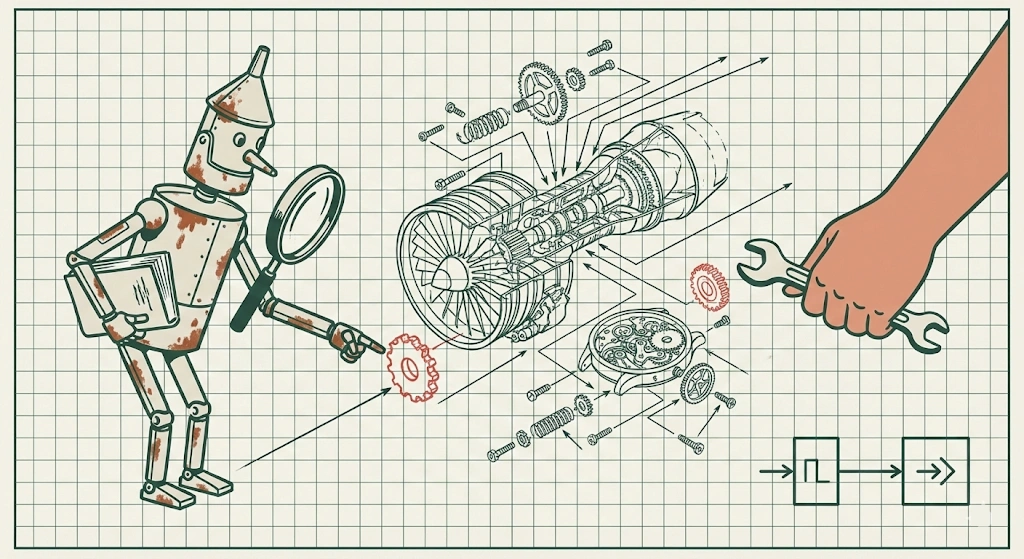
A complicated system may consist of thousands of parts, but the relationship between these parts is linear and deterministic.
Example: A Boeing 747 jet engine or a luxury Swiss watch.
Nature: The parts of a jet engine can be disassembled and reassembled. There is a “user manual” or a “blueprint.”
Problem Solving: If the engine fails, an expert technician comes, isolates the problem, performs a “root cause” analysis, and replaces the part. Input A always produces Output B.
Management: Tin Man organizations belong here. Hierarchy, specialization, and standardization work here. Because the future is a repetition of the past.
2.2. Complex Systems: The Chaos of the Ocean
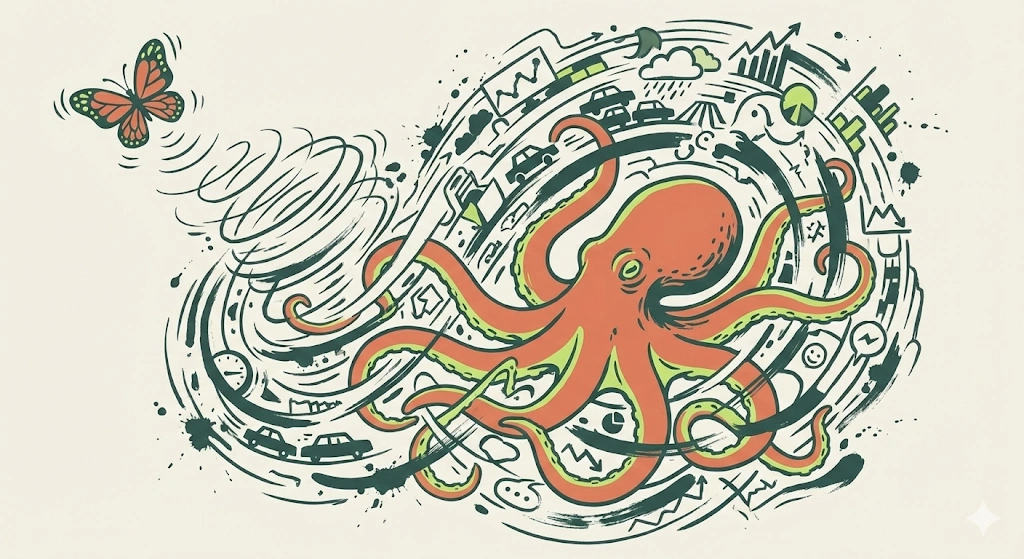
A complex system, on the other hand, exhibits non-linear behaviors where the whole is greater than the sum of its parts. Parts (agents) are in constant interaction with each other, and unpredictable results (emergent behavior) arise from these interactions.
Example: City traffic, a rainforest, the human brain, social media trends, or a corporate culture.
Nature: There is no blueprint. Changing one part can create a butterfly effect throughout the system. The same inputs can yield completely different outputs at different times.
Problem Solving: You cannot “fix” a traffic jam; you can only “manage” it. There is no root cause; there is the instantaneous interaction of countless factors.
Management: The Octopus Organization belongs here. In this world, “control” is an illusion. There is only “sensing,” “responding,” and “adapting” (sense and respond).
As Le-Brun and Werner emphasize, the complicated world is a world of plans and recipes; if a part breaks, you fix it. The complex world is like the ocean; currents constantly change, and all you can do is sense the flow and change direction.
2.3. The Cynefin Framework and Business Application
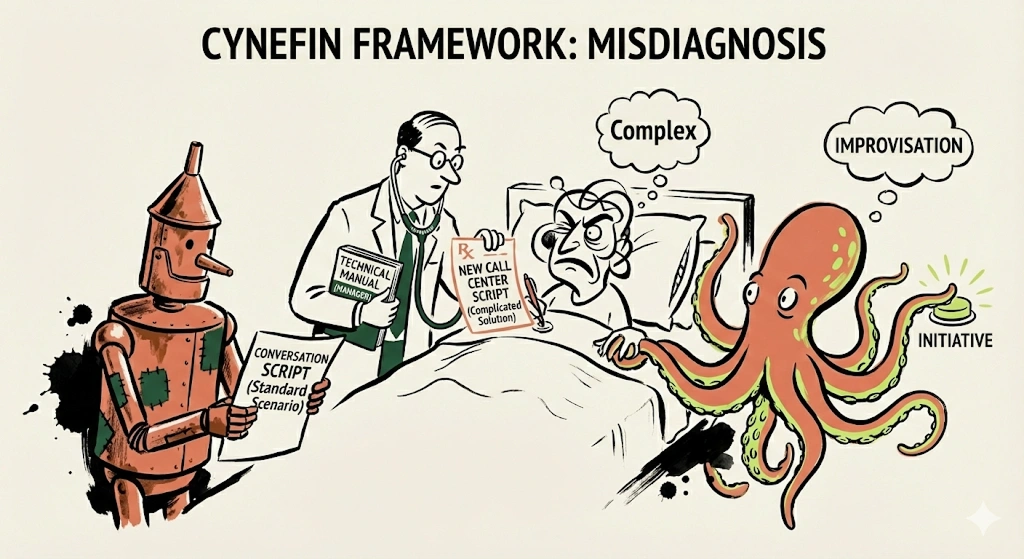
Dave Snowden’s Cynefin framework clarifies this distinction. The biggest mistake business leaders make is trying to solve a complex problem (such as employee motivation or changing customer behaviors) as if it were a complicated problem (such as a software update).
Misdiagnosis: When customer dissatisfaction increases (Complex problem), management immediately writes a new “call center script” (Complicated solution).
Result: Employees follow the script (Antipattern), but the customer gets even angrier. Because human interaction is complex; it does not fit into a standard scenario. In the Octopus model, the employee is given initiative; they are asked to “improvise” according to the situation at that moment.
Part 3: Anatomy of the Octopus: Biological Intelligence Model
Why the Octopus? This sea creature is a masterpiece of evolutionary adaptation. Its biological structure is the exact counterpart of the operational model modern organizations need.
3.1. Distributed Intelligence
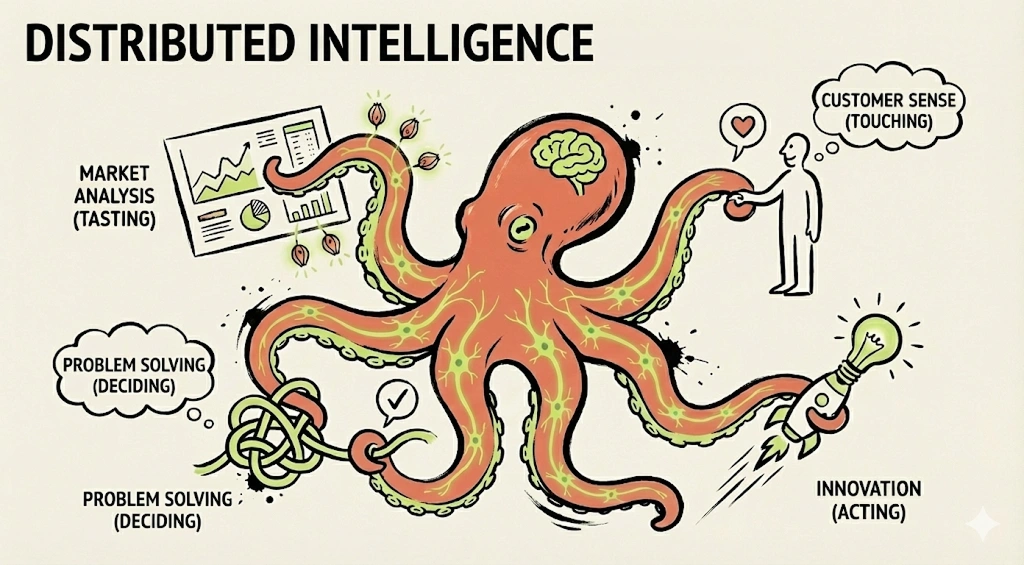
A human’s or a Tin Man’s intelligence is concentrated in the “center” (the brain/CEO). Orders originate from the brain and are transmitted through the nervous system (middle management) to the hands (employees). This process is slow and suffers from information loss.
Two-thirds of the octopus’s neurons are in its arms. Each arm, independently, can:
Taste (Analyze the market).
Touch (Feel the customer).
Decide (Solve the problem).
Act (Innovate).
The central brain determines a general direction (strategy/purpose), but the arms decide “how” to do it. This is the Distributed Intelligence model.
Octopus Organizations derive success not from rigid control, but from distributed intelligence, continuous learning, and adaptation. The octopus’s arms can think and act independently, yet they work in perfect harmony.
3.2. The Octopus and the Tin Man: Differences in the Field
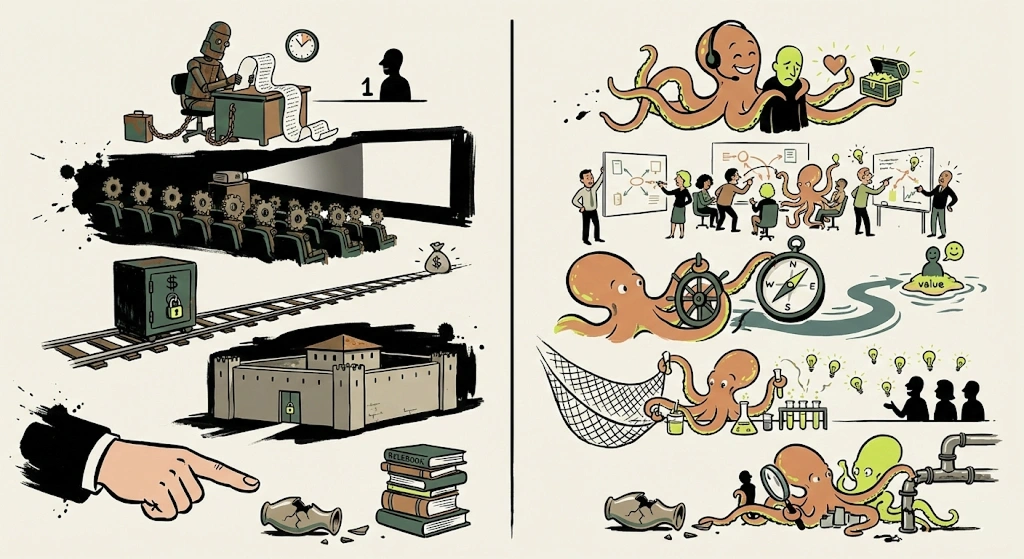
To put theory into practice, the differences between the daily operations of these two models are dramatic.
Table 1: Organizational Behavior Comparison
| Scenario | Tin Man (Mechanical) | Octopus (Biological) |
| Call Center | The representative is like a “robot.” Reads the script. Goal: Shorten call duration (efficiency). Authority: None. | The representative is a “problem solver.” Listens, empathizes. Goal: Win the customer (value). Authority: Can use budget, can take initiative. |
| Meeting Room | Like a theater stage. Big screen, slides, silent audience. Information is “consumed.” | Like a workshop. Whiteboards, chaos, discussion. Everyone standing. Information is “produced.” |
| Strategy | Annual plans, precise budgets. “Increase EBITDA by 10%.” Goals are abstract and financial. | Dynamic steering. “Are we creating value for the customer?” Goals are concrete and purpose-oriented. |
| Innovation | Done in the “Innovation Department.” Isolated. Disconnected from the real world. | It is everyone’s job. Continuous experiments are conducted at the edges closest to the customer (tentacles). |
| Error Management | The guilty party is sought. “Who did it?” Procedures are tightened. (Single-Loop Learning) | The system is questioned. “Why did it happen?” Assumptions are tested. (Double-Loop Learning). |
3.3. Relational Depth: From Transactions to Relationships
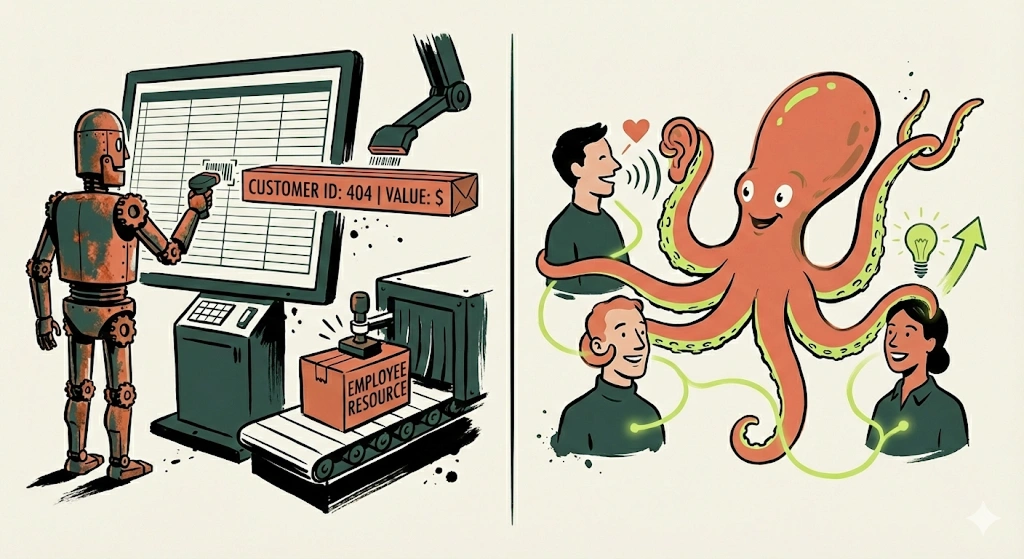
In the Tin Man world, work is “transactional”. The customer is a line of data, the employee is a resource. In the Octopus world, however, work is “relational”. People want to be inspired, not managed. Customers want to be heard, not transact.
The Octopus Organization places this theme at the center of its business processes. A call center representative setting aside the script to establish a human bond with a crying customer might seem inefficient (the duration increases), but in the Octopus model, this is the most critical action that creates loyalty and value.
Part 4: Organizational Pathologies: Anti-Patterns That Hinder Development
What stops an organization from turning into an Octopus? Le-Brun and Werner call this an “Antipattern”. Antipatterns are conditioned, formulaic responses given to complex problems that usually make the situation worse. The most destructive of the countless antipatterns detailed in their work are gathered into three main categories.
4.1. Behaviors Compromising Clarity
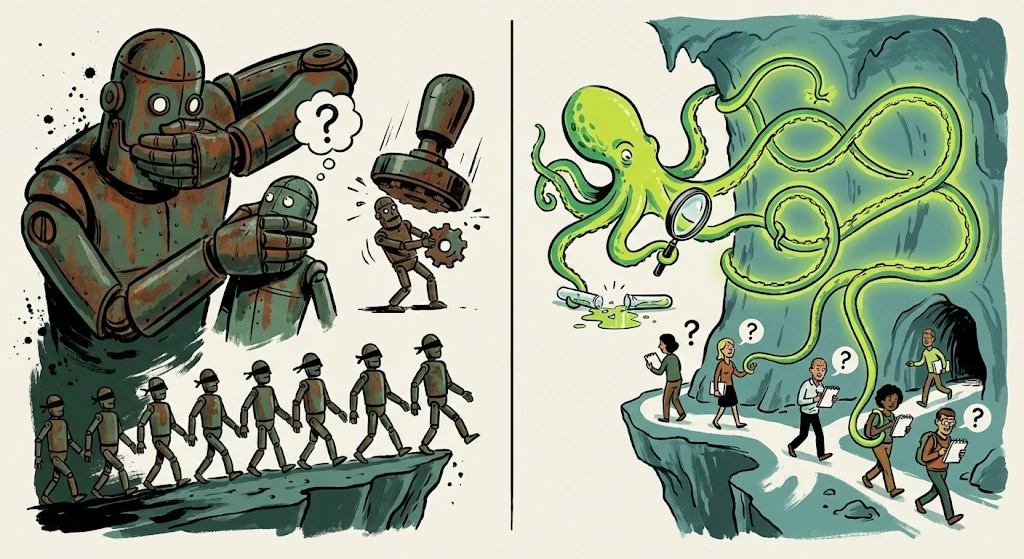
- Symptom: Leaders assume everyone understands the “big picture.” Strategy documents are filled with jargon like “Synergy,” “Optimization,” “Paradigm,” which David Ogilvy would describe as the work of a “pretentious ass.”
- Result: Employees do not know what to do. Targets are too abstract, like “increasing EBITDA,” to be a reason to get out of bed in the morning.
- Octopus Approach: Clarity is a strategic weapon. Targets are transformed into simple stories everyone can understand. A “PowerPoint ban” is applied, like at Amazon; ideas are explained with clear texts written in full sentences (narratives). As Ogilvy said: “Write the way you talk. Be natural.”
4.2. Behaviors Undermining Ownership
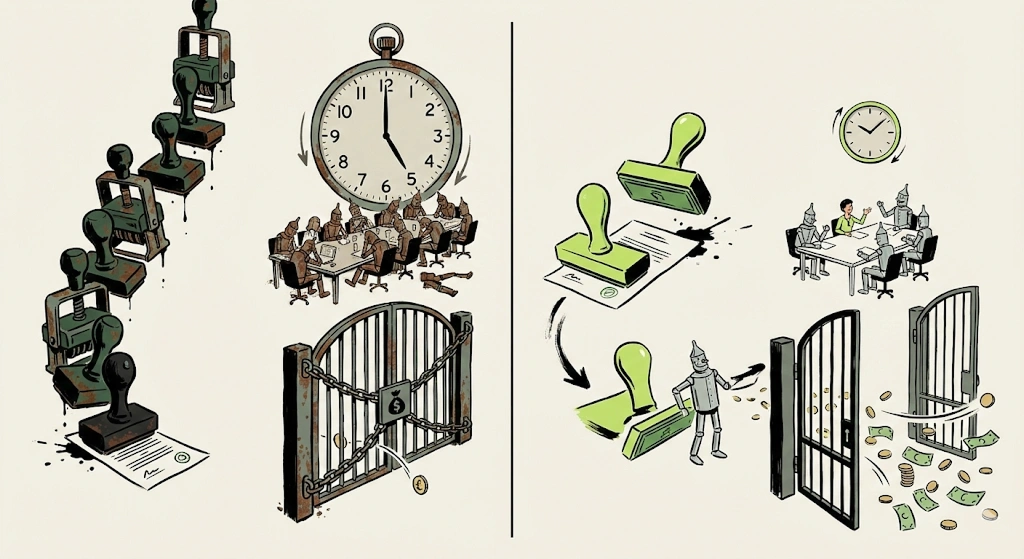
- Symptom: It says “Employees are our most valuable asset” on company walls, but the HR department classifies them as “Human Resource” or “Capital.” Even purchasing a pen might require 11 signatures.
- Result: Learned helplessness. Human nature, which claims the world by saying “Mine!” from infancy, is crushed by corporate procedures. Research shows that suppressing this sense of ownership leads to an annual productivity loss of $8.9 trillion.
- Octopus Approach: Trust is cheaper than control. As in the Netflix example, instead of complex permission policies, the principle of “Act in the company’s best interest” is introduced. Ownership blossoms only when control is relinquished.
4.3. Behaviors Stifling Curiosity
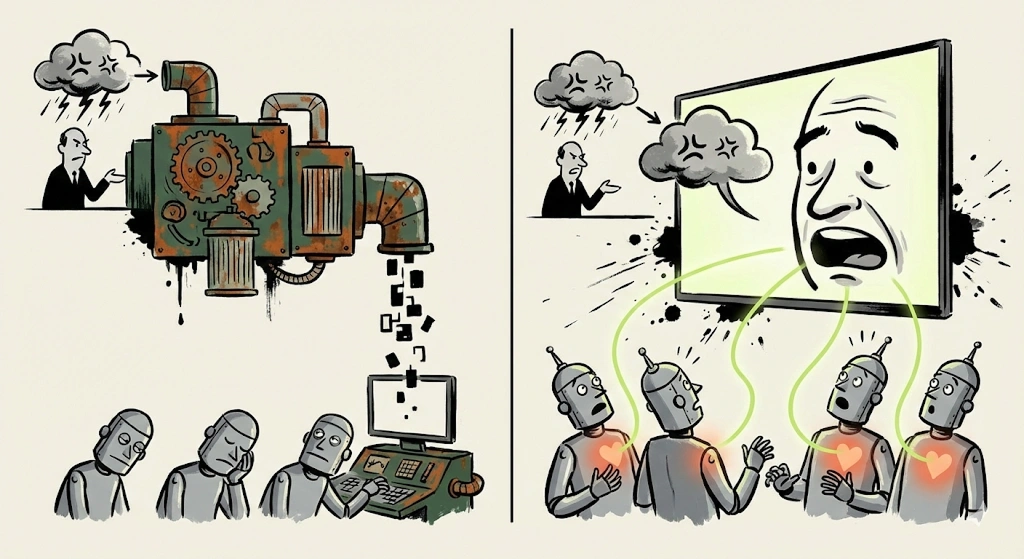
- Symptom: “Don’t ask questions, do your job.” Leaders say they want innovation but only reward predictable results. Those who make mistakes are punished.
- Result: Organizational blindness. The company cannot realize it is heading towards an abyss because no one dares to ask, “Why are we on this path?”. According to data, while 73% of executives find curiosity valuable, only 9% of employees feel encouraged.
- Octopus Approach: An error is a piece of learning data. A “Double-Loop Learning” culture is adopted. When a problem occurs, not only the symptom (single loop) but also the mindset and assumptions that created the problem (double loop) are questioned.
Part 5: Treatment Protocol: Strategies for Transforming into an Octopus
Once the diagnosis is made, treatment must begin. However, in a complex system, “treatment” is not dismantling and reassembling the system, but intervening in the system’s dynamics. Inspired by Donella Meadows’ system intervention hierarchy, Le-Brun and Werner offer a three-level action plan.
5.1. Level 1: Adjusting Parameters
This is the lowest-cost and fastest intervention. It is playing with the settings of the existing system.
- Action: Reducing the number of signatures in approval mechanisms (decreasing from 11 to 2). Shortening meeting durations. Increasing spending limits.
- Impact: Limited but visible. It unclogs bottlenecks but does not fundamentally change the system.
5.2. Level 2: Tuning the System’s Engine
This level involves changing information flow and feedback loops.
- Action: Reflecting customer complaints directly onto engineers’ screens without filtering or summarizing. In a software company, instead of monthly reports, live customer support tickets flowed onto giant screens on the engineering floor.
- Impact: Engineers saw “a real person’s pain” instead of “an abstract problem.” Empathy and ownership increased. The feedback loop shortened.
5.3. Level 3: Rewriting Organizational DNA
This is the hardest but most transformative level. It is changing the system’s rules, goals, and mindset.
- Action: Changing goals from “Quarterly Profit” (output) to “Customer Lifetime Value” (outcome). Moving from a command-and-control culture to a culture of agency and trust.
- Impact: Permanent transformation. The Tin Man’s metal turns into the Octopus’s living tissue.
5.4. Experimental Approach: No Big Plans, Small Experiments
Octopus Organizations do not make 5-year strategic plans. Instead, they constantly conduct experiments.
- Stopping: Like Netflix removing its vacation policy. Remove a bureaucratic obstacle and watch what happens.
- Deviating: Like Google limiting hiring interviews to 4. Add “productive friction” to an existing process.
- Piloting: Coca-Cola turning “Approval” gates into a “Guardrail” system. Approval authorities/Gatekeepers turned into guides asking, “How can we do this safely?” instead of saying “No.”
Chapter 6: Spreading Strategy: The End of the Scaling Myth
One of the favorite words of the traditional management approach is “Scaling.” “This pilot project was very successful, let’s implement it company-wide tomorrow!” (Roll-out). This approach is the Tin Man mindset; it rests on the assumption that parts are interchangeable. However, in complex systems, what works in one context (e.g., the US sales team) can be a disaster in another context (e.g., the Japan R&D team).
6.1. The Art of Spreading
Octopus Organizations adopt “Spreading” instead of “Scaling.” This is a biological process. A good idea spreads organically within the organization, like a virus or a beneficial mutation.
Pull vs. Push: Scaling is a “push” strategy (top-down imposition). Spreading is a “pull” strategy. Other teams look at the successful team and say, “How did you do that? We want it too.”
Amazon Example: 20 years ago, Stephen Brozovich, a web developer at Amazon, got tired of the clunky command-line interface used to upload images. He coded a visual interface to make his own work easier. His manager didn’t order him to do it. In fact, no one asked him to. But the tool was so useful that other developers saw it and started using it. In a short time, it spread throughout the company. No “Corporate Transformation Emails” were sent, no mandatory training was given. It spread just because it worked.
6.2. Encouraging Spreading
The task of leaders is not to force this spreading but to prepare the suitable environment for spreading.
Visibility: Make success stories and tools visible.
Permission: Give people permission to build their own tools or change their processes.
Connection: Keep communication channels open between teams (Break down silo walls).
Part 7: Leadership Evolution: From Machinist to Gardener and Jazz Musician
The transition from Tin Man to Octopus requires a radical change in the definition of leadership. In the Machine Age, the leader was the operator at the controls of the machine. He was the “hero manager” who knew when to pull the lever and which button to press. In the Biological Age, this model is now invalid.
7.1. The Leader as a Gardener
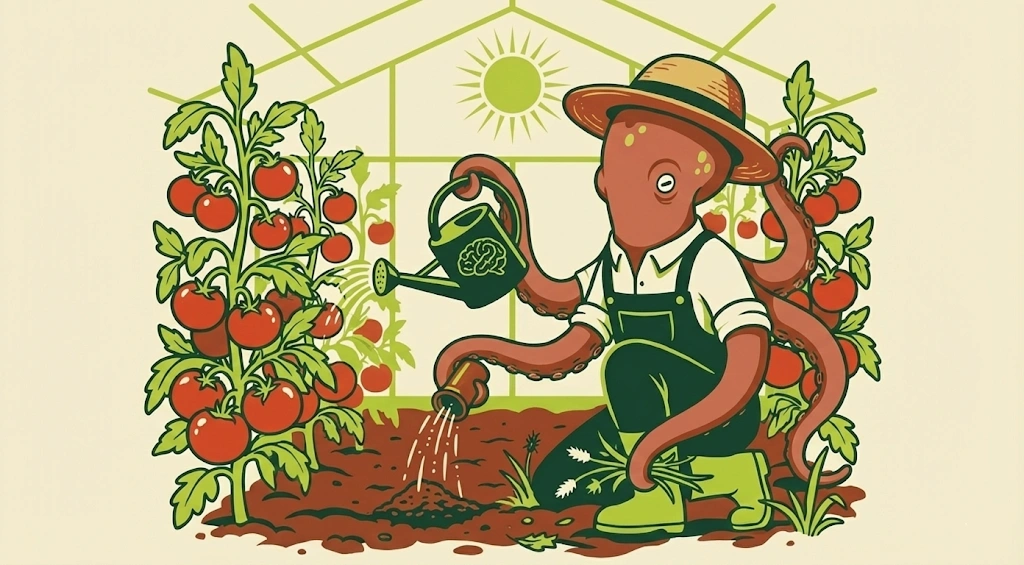
As emphasized in General Stanley McChrystal’s book “Team of Teams” and in Le-Brun/Werner’s analyses, the new leader is a Gardener.
Metaphor: A gardener cannot order a tomato plant to “Grow!” They cannot make the tomato grow by pulling on its stem. The only thing they can do is provide the conditions necessary for the plant to grow (soil, water, sun, fertilizer) and clear obstacles (weeds, pests). The plant’s genetics (potential) will handle the rest.
Application: The Octopus leader does not try to directly control the results (the fruit). They manage the culture, psychological safety, tools, and purpose (the soil and water). They allow employees (plants) to realize their own potential.
In the Octopus model, the leader’s primary job is to work ON the system, not IN the system. In this model, leaders become system architects obsessed with improving the environment that enables others to excel.
7.2. The Leader as a Jazz Musician
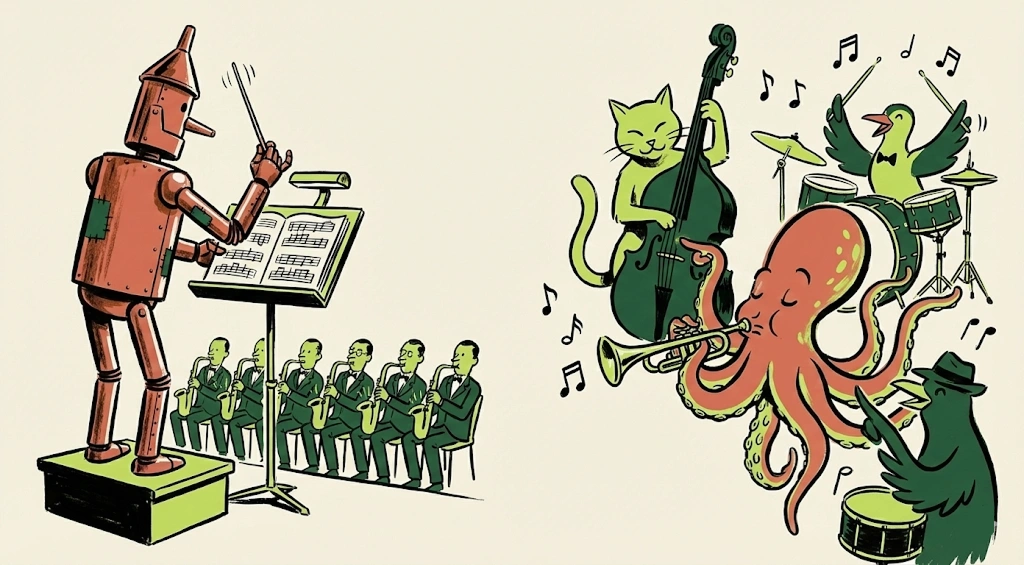
Another powerful metaphor is the transition from Symphony Orchestra conductor to Jazz Band member.
Symphony (Tin Man): The leader (Conductor) manages everyone with a baton (authority) in hand. There is a music sheet (blueprint/plan) in front of them. Everyone knows beforehand what they will play. Mistakes are unacceptable. Perfection is adhering to the plan.
Jazz (Octopus): The leader also plays an instrument. There is no music sheet, or only a basic structure (chords/purpose) is known. The music emerges through instantaneous listening and responding (improvisation). The leader sometimes takes a solo, sometimes steps back and lets someone else shine. There are no mistakes, only “unexpected opportunities.”
The Octopus leader is a jazz musician who can dance with uncertainty (chaos), listen to their team, and adapt instantaneously. They derive their authority not from their rank, but from their contribution and adaptability.
7.3. Communication Lessons from David Ogilvy and Seth Godin
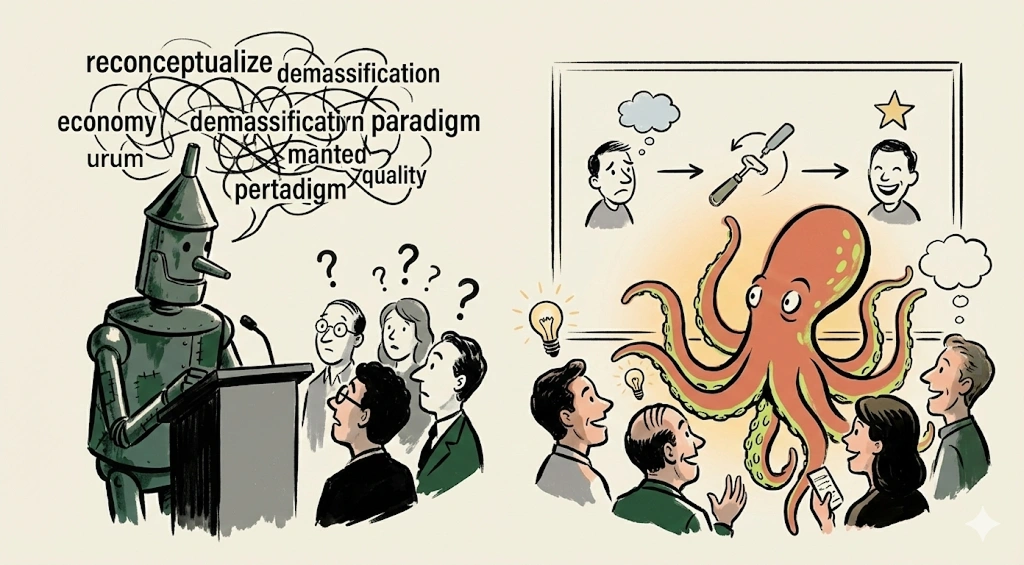
This new leadership style also requires simplicity and honesty in communication.
Jargon Ban: David Ogilvy characterized those who use words like “reconceptualize” and “demassification” as “pretentious asses.” The Octopus leader simplifies complex concepts. They explain the strategy in a language everyone can understand.
Storytelling: Seth Godin says that people react to stories and emotions, not to data or logic. The leader must present not only “what” will be done but also “why” it is being done within a story arc. Instead of saying “We are making this change because we need to meet the quarter-end figures” (Tin Man); they should say, “We are making this change because we want to solve this specific problem of our customer, Ms. Ayşe” (Octopus).
Conclusion: The Courage to Sail into the Ocean
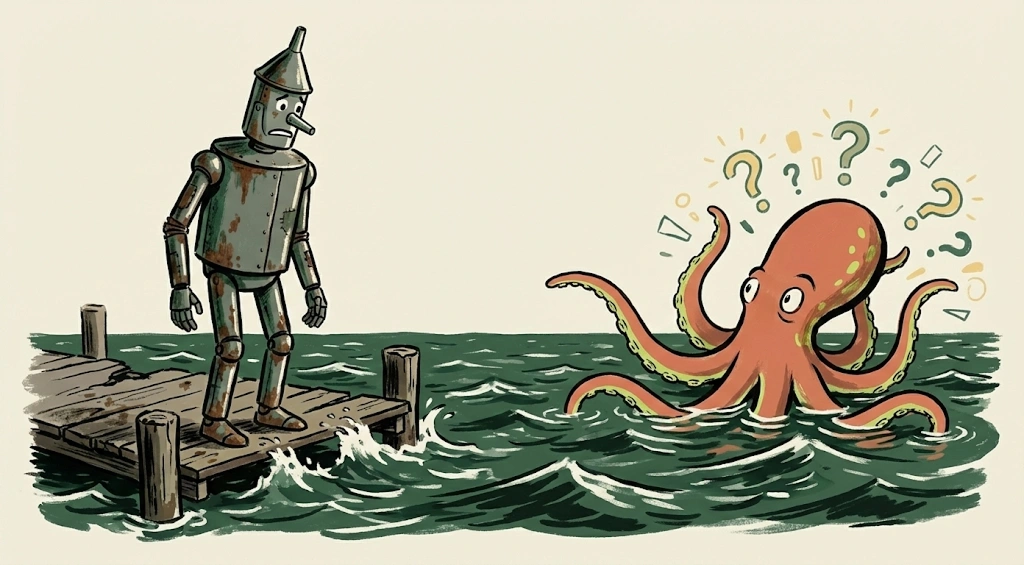
Change is frightening. Remaining a Tin Man, even if rusted, can feel safe and familiar. It’s easy to say, “It’s always been this way, it will always be this way.” However, the ocean (market, technology, competition) is rising, and swimming with rusted joints is impossible.
Turning into an Octopus Organization is not just applying a new management technique. It is redefining the nature of organizational existence.
Let Go of Control: Trust is the strongest binder. Trust distributed intelligence.
Sacralize Curiosity: Make asking questions more valuable than the answer.
Humanize: See your employees not as resources but as creative, feeling, problem-solving biological beings.
All eight arms of the octopus are part of its brain. Your company’s intelligence is also not in the CEO’s room, but at every point that touches the customer. Let those arms work, feel, experience, and carry you to the future.
The Tin Man had no heart and wanted one from a wizard. Your organization already has a heart; it’s just waiting to beat under the rust of bureaucracy. Do not wait for the oil can. Shake off the rust and start swimming.
Table 2: Octopus Transformation Scorecard (Summary)
| Dimension | Old Paradigm (Tin Man) | New Paradigm (Octopus) | Call to Action |
| Worldview | Complicated (Mechanical) | Complex (Biological/Ecological) | Let go of control, focus on adaptation. |
| Human Resource | Cog / Resource | Cell / Owner | Give authority, trust. |
| Error | Failure / Blame | Data / Learning | Experiment, learn fast. |
| Growth | Scaling | Spreading | Don’t push, let them pull. |
| Leadership | Machinist / Conductor | Gardener / Jazz Musician | Prepare the environment, join the music. |
| Communication | Jargon / Order | Story / Question | Simplify, be clear. |
The core concepts in this article are inspired by Jana Werner and Phil Le-Brun’s work “Become an Octopus Organization – How your company can adapt to a complex world” (Harvard Business Review, November 2025); and are interpreted and enriched with the Cynefin framework and various leadership metaphors (Ogilvy, Godin, etc.).
Resources
- Become an Octopus Organization – How your company can adapt to a complex world, | by Jana Werner and Phil Le-Brun, accessed December 27, 2025, https://hbr.org/2025/11/become-an-octopus-organization
- Scientific management – Wikipedia, accessed December 27, 2025, https://en.wikipedia.org/wiki/Scientific_management
- Taylorism | Research Starters – EBSCO, accessed December Aralık 27, 2025, https://www.ebsco.com/research-starters/business-and-management/taylorism
- The Evolution of Metaphors: How Each Era’s Technology Shaped Its Worldview, accessed December 27, 2025, https://johnrector.me/2025/07/29/the-evolution-of-metaphors-how-each-eras-technology-shaped-its-worldview/
- Accountable to Darwin vs. Accountable to Newton – Collaborative Fund, accessed December 27, 2025, https://collabfund.com/blog/darwin-newton/
- From Newton to Darwin – Tim Brown – The World Economic Forum, accessed December 27, 2025, https://www.weforum.org/stories/2011/01/from-newton-to-darwin-tim-brown/
- Complicated vs. Complex Systems: Why the Difference Matters | I. M. Financial Team, accessed December 27, 2025, https://www.im-financial.com/blog/complicated-vs-complex-systems-why-the-difference-matters
- Complicated vs Complex – Rebecca Agent, accessed December 27, 2025, https://www.rebeccaagent.com/blog/complicated-vs-complex
- Complex or complicated?. Understanding the difference between… | by Alexandre Di Miceli, accessed December 27, 2025, https://alexdimiceli.medium.com/complex-or-complicated-41b2937ed01b
- Leadership in Harmony: Lessons from Jazz, Rock, and Symphony – Amir Sabirović – Medium, accessed December 27, 2025, https://amirsabirovic.medium.com/leadership-in-harmony-lessons-from-jazz-rock-and-symphony-f8e6879bd7d2
- Jazz as a Metaphor for the New Model of the Enterprise – Don Tapscott, accessed December 27, 2025, https://dontapscott.com/speaking/jazz/
- How to become a Successful Writer: Seth Godin in Conversation – Part 2 – Write To Done, accessed December 27, 2025, https://writetodone.com/seth-godin-part-2/
- Book Brief: The Octopus Organization | by Russell McGuire | Dec, 2025 | ClearPurpose, accessed December 27, 2025, https://clearpurpose.media/book-brief-the-octopus-organization-de544e7b4756
- 10 Writing Tips From the World’s Best Marketer – Ship30for30, accessed December 27, 2025, https://www.ship30for30.com/post/10-writing-tips-from-the-worlds-best-marketer-david-ogilvy
- The Leader as Gardener – Lead Change, accessed December 27, 2025, https://leadchangegroup.com/the-leader-as-gardener/
- Effective Team Leader: Leading Like a Gardener – McChrystal Group, accessed December 27, 2025, https://www.mcchrystalgroup.com/insights/detail/2022/10/12/how-to-be-a-Great-Team-Leader
- 10 ways to lead like a gardener | Connect Consulting Group, accessed December 27, 2025, https://connectconsultinggroup.com/10-ways-to-lead-like-a-gardener/
- The Science of Leadership: Nine Capacities to Navigate Complexity and Drive Impact, accessed December 27, 2025, https://www.businessofgovernment.org/blog/science-leadership-nine-capacities-navigate-complexity-and-drive-impact
- How To Write Like Seth Godin – Copywarfare, accessed December 27, 2025, https://copywarfare.com/how-to-write-like-seth-godin/