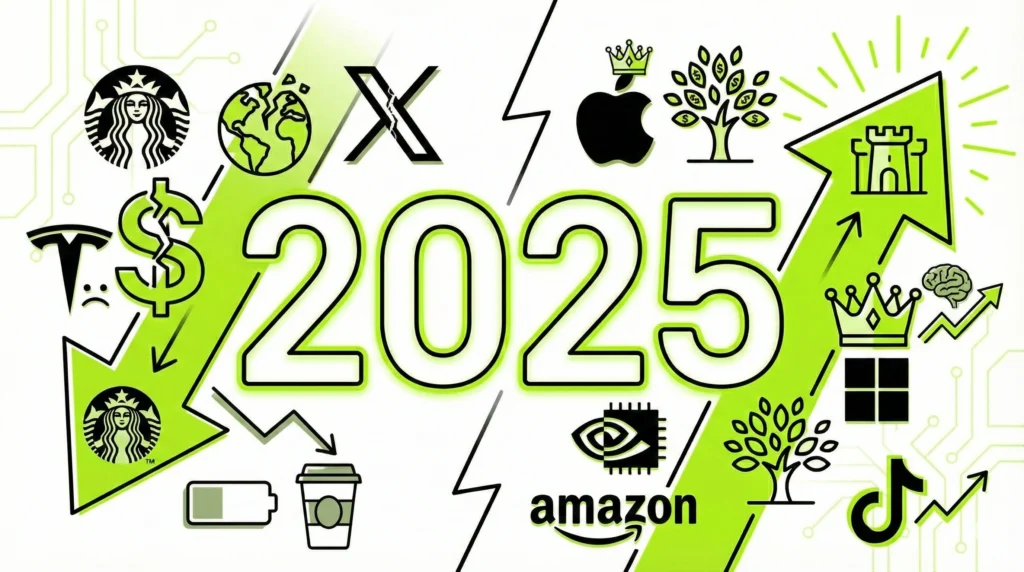
There has never been a period where the gap between the global economy and brand values has widened this much. The Brand Finance Global 500 2025 report reveals how brands are experiencing their golden age in the shadow of economic stagnation. This analysis serves as a compass not only for marketing professionals but for anyone wishing to understand the modern economy.
1. The Anatomy of the Paradox: Economy Stagnant, Brands Exuberant
The economic picture of 2025 presents a surprising paradox. According to United Nations data, while global economic growth hovers at a stagnant level of 2.8%, inflation remains sticky at 3.4%. Consumer purchasing power is melting, and company margins are shrinking.
However, this is where the story evolves in a completely different direction: The total value of the world’s top 500 brands increased by 10% compared to the previous year, reaching $9.5 trillion. While the economy grows by 2.8%, brands gain 10% in value. This “Great Decoupling” indicates that brands are no longer just marketing assets, but have become the safest harbor against economic uncertainty.
Just as investors seek “alpha” (returns above the market average) in financial markets, companies investing in strong brands generate “Brand Alpha.” This means growth that exceeds the general performance of the economy.
2. The Mathematics of Value: How is Brand Calculated?
The “Royalty Relief” methodology used by Brand Finance is a scientific approach compliant with ISO 10668 standards. To explain simply: If your company did not own your brand, how much royalty would you have to pay to use it? That is the value of your brand.
Value Creation Chain:
- Input: Marketing investment, R&D, sustainability
- Strength: Awareness, preference, recommendation (0-100 score)
- Impact: Rate attributable to the brand (between 2-5% of revenue)
- Value: Present value of future revenues
This formula offers a roadmap that every company, from startups to Fortune 500s, can understand. You cannot immediately control the final stage (value), but you have full control over the first two stages.
3. Trillion Dollar Empires
Apple: The $574.5 Billion Fortress
Apple reaching $574.5 billion with 11% growth represents the victory of the “Ecosystem Economy.” A consumer buying an iPhone doesn’t just buy a phone; they acquire a passport to a digital society consisting of iCloud, iMessage, Apple Pay, and the App Store.
- Critical Metrics:
- Global awareness: 80%+
- Purchase intent: 45%
- Reputation score: 7.7/10 (sector leader)
Strategic Threat: Apple’s “gatekeeper” position is both the factor creating its value and its biggest risk. Anti-trust regulations in the US and EU threaten the App Store’s 30% commission.

Microsoft: Artificial Intelligence Operating System
Microsoft’s 35% growth ($120 billion value increase) is the result of the “AI Pivot” strategy. By integrating Copilot into Office and through its OpenAI partnership, it positioned itself as the “corporate AI operating system.” Receiving an AAA+ strength rating as a 40-year-old brand proves that old brands die from stagnation, not age.

Google: Existential Dilemma
Google’s situation is interesting: with a 24% increase in value and a brand valuation of $413 billion, it is the world’s third-strongest brand. However, generative AIs like ChatGPT and Perplexity are threatening its search monopoly. Google’s “reservoir of trust,” built over the past 20 years, gives it extra time to adapt to technological change.

4. The Anatomy of Value Loss: The “Losers” of 2025
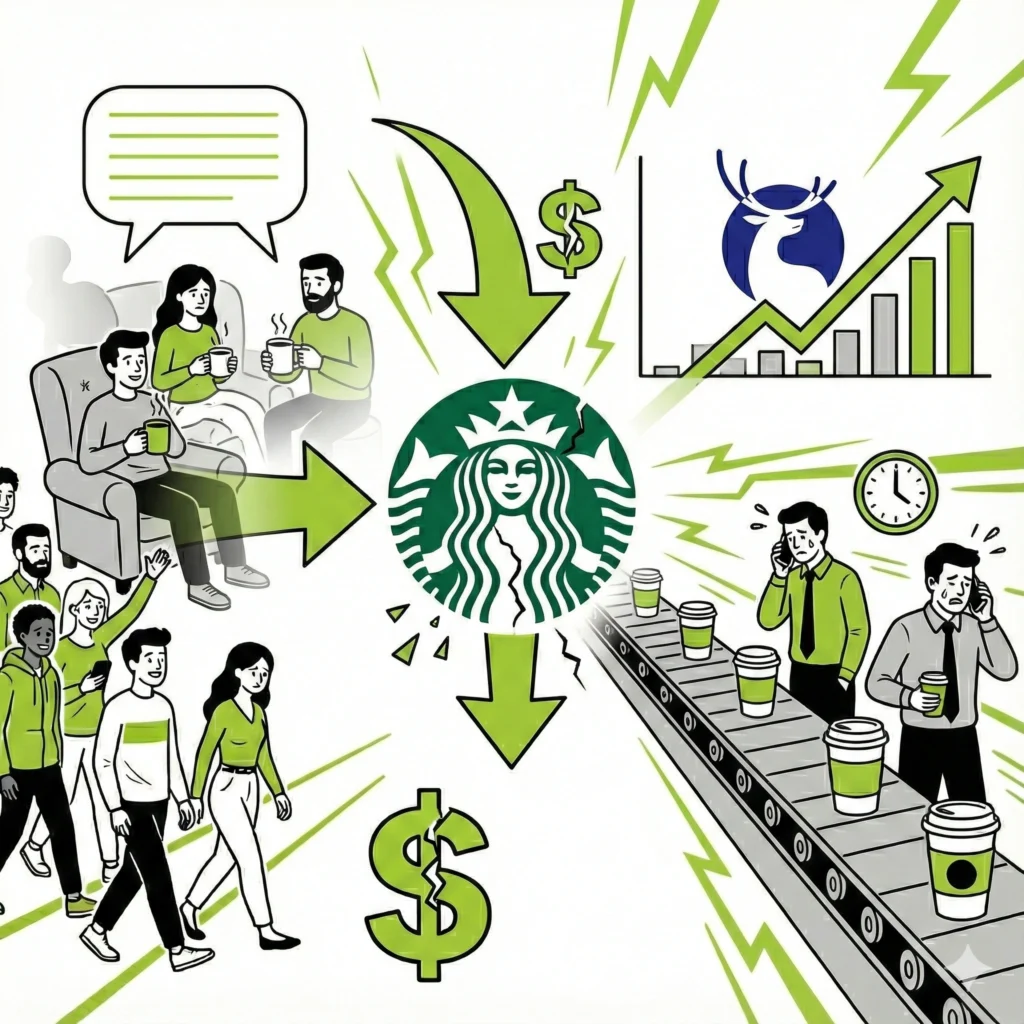
Starbucks: The Collapse of the Third Place
- Value Loss: -36.1% (drop to $38.8 billion)
Reason: Abandoning the “third place” promise (the social space between home and work) to adopt a speed and efficiency-focused model. Experience turned into processing. The rise of Luckin Coffee in China (68% growth) demonstrated the power of local rivals.
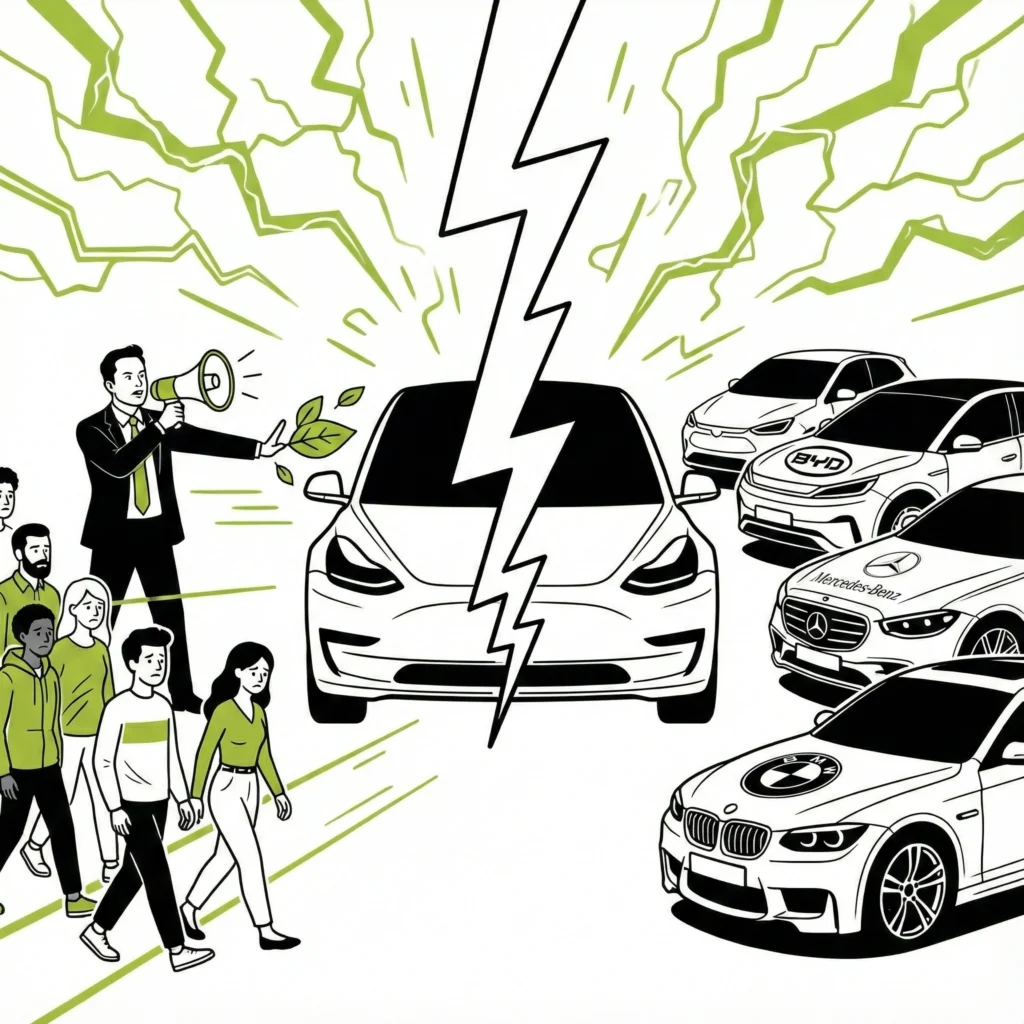
Tesla: The Polarization Tax
- Value Loss: -26.2% (drop to $42.9 billion)
Reason: The CEO’s polarizing attitude alienated the core customer base (liberal, environmentalist buyers). The Electric Vehicle (EV) market is no longer Tesla vs. Gasoline, but Tesla vs. BYD, Mercedes, BMW.
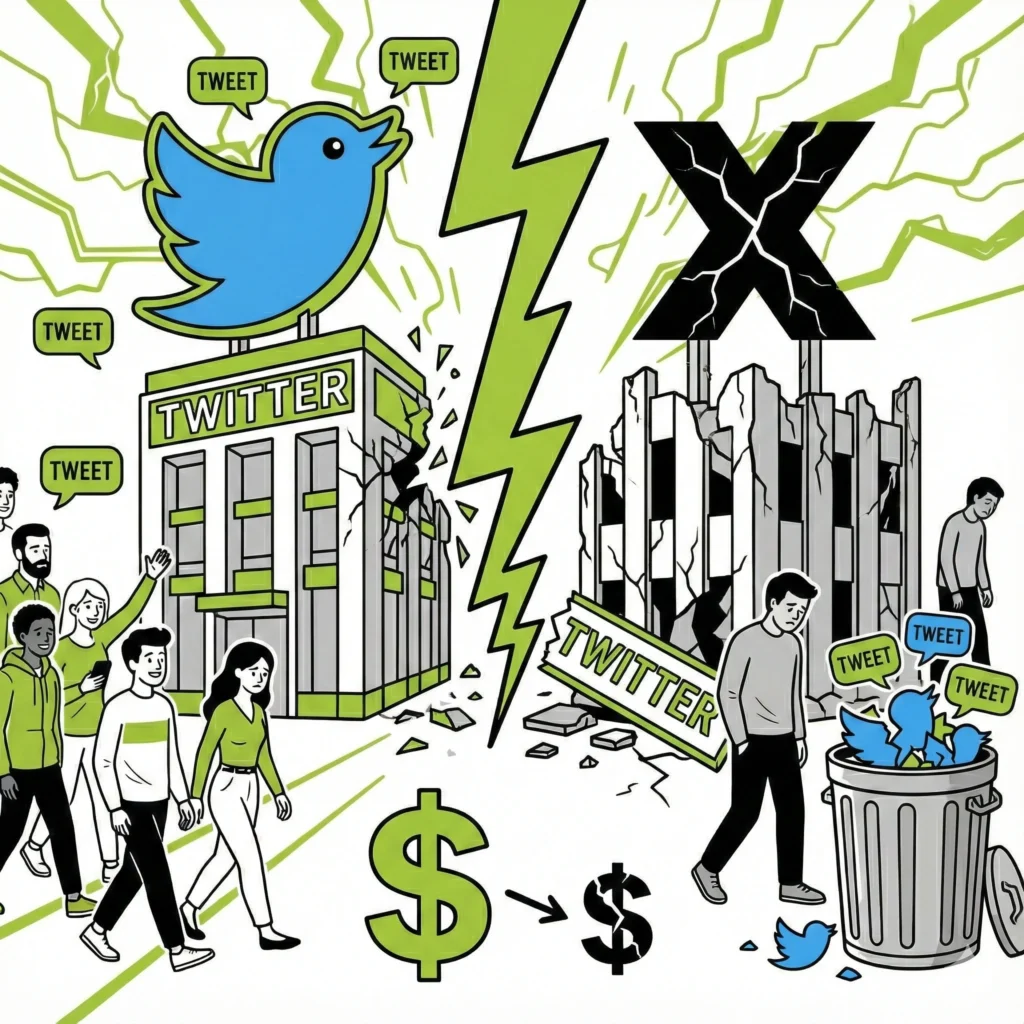
X (Twitter): Destruction of Trust
- Value Loss: From $5.7 billion in 2022 to $498 million (-91%)
Reason: 15 years of cultural capital was thrown away in the rebranding from Twitter to X. Culturally embedded terms like “Tweet” were abandoned. Ad revenue dropped from $1 billion quarterly to $600 million.
5. Top 20 Most Valuable Brands: Power Dynamics
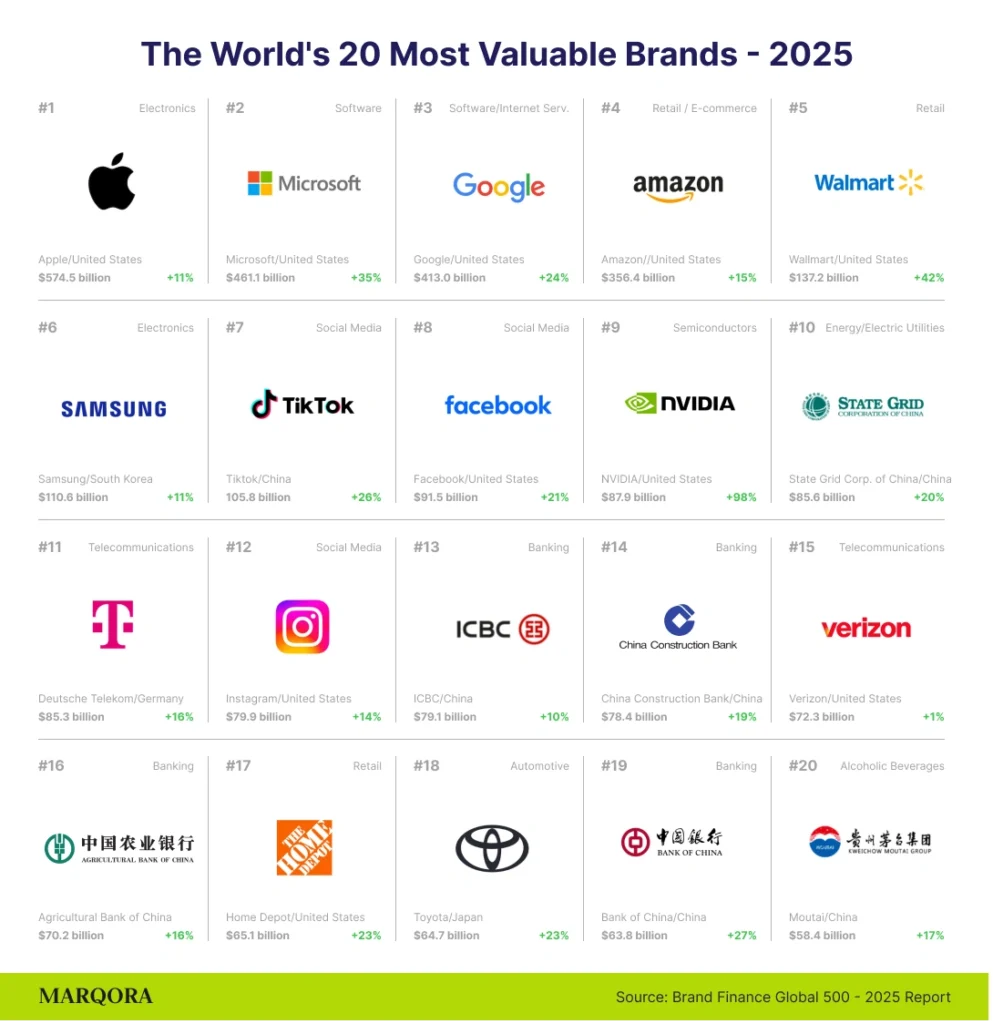
The Top 20 Most Valuable Brands of 2025:
- Apple – $574.5B (+11%) – Electronics
- Microsoft – $461.1B (+35%) – Software
- Google – $413.0B (+24%) – Software/Internet Services
- Amazon – $356.4B (+15%) – Retail
- Walmart – $137.2B (+42%) – Retail
- Samsung Group – $110.6B (+11%) – Electronics
- TikTok/Douyin – $105.8B (+26%) – Social Media
- Facebook – $91.5B (+21%) – Software
- NVIDIA – $87.9B (+98%) – Semiconductors/AI Hardware
- State Grid Corporation of China – $85.6B (+20%) – Energy/Electric Utilities
- Deutsche Telekom – $85.3B (+16%) – Telecommunications
- Instagram – $79.9B (+14%) – Software
- ICBC – $79.1B (+10%) – Banking
- China Construction Bank – $78.4B (+19%) – Banking
- Verizon – $72.3B (+1%) – Telecommunications
- Agricultural Bank of China – $70.2B (+16%) – Banking
- Home Depot – $65.1B (+23%) – Retail
- Toyota – $64.7B (+23%) – Automotive
- Bank of China – $63.8B (+27%) – Banking
Moutai – $58.4B (+17%) – Alcoholic Beverages
6. Infrastructure Wars: Chip Crisis and the NVIDIA Miracle
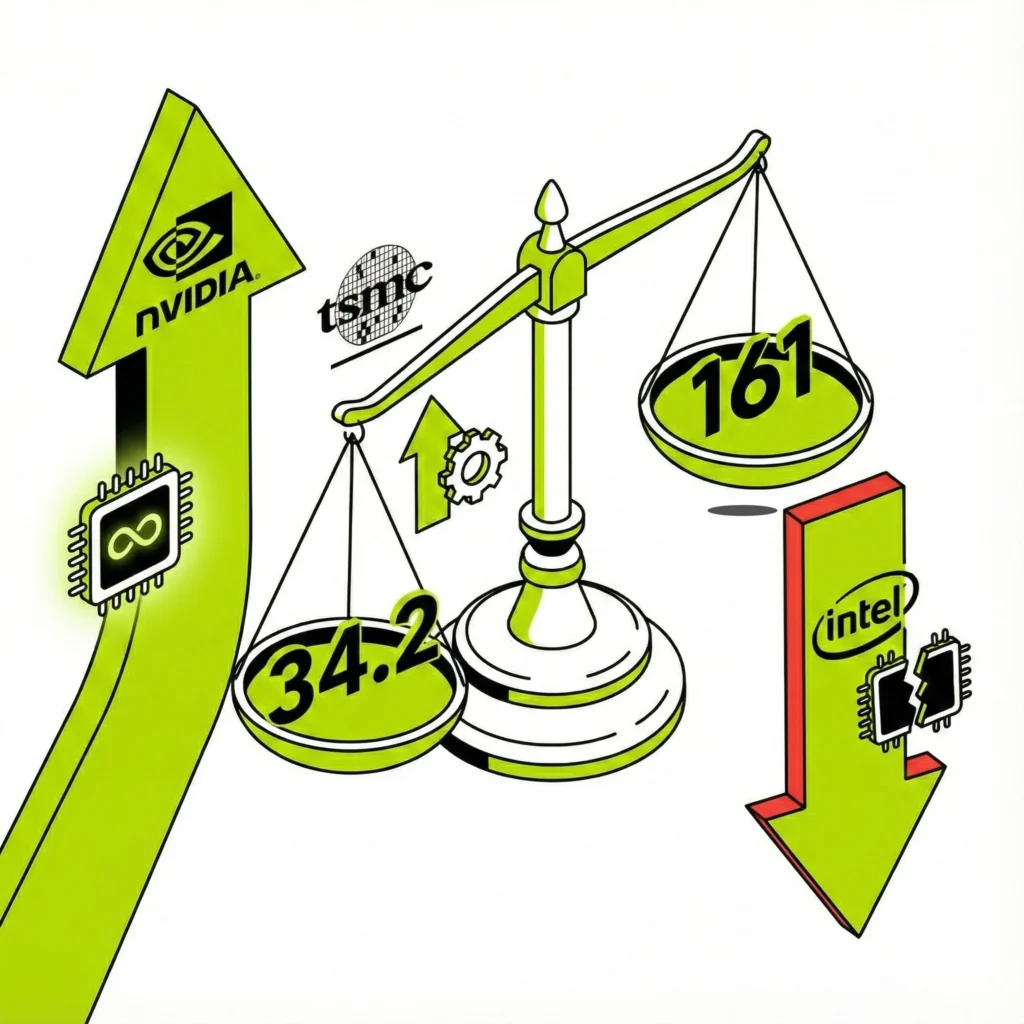
NVIDIA’s 98% growth is not a coincidence, but an indication of a structural shift. Historically, chip brands (like Intel) struggled to create consumer brand value. NVIDIA overcame this and became synonymous with “possibility”: No NVIDIA without AI, no AI without NVIDIA.
- Comparison:
- NVIDIA: 98% growth, rose to 9th place.
- Intel: Dropped to 161st place.
TSMC: 36.7% growth, reaching $34.2 billion. Value is shifting to designers (NVIDIA) and manufacturers (TSMC), while integrated players (Intel) are falling behind.
7. Regional Power Balance
America: Resilient Hegemon
- 194 brands with over 50% of the total value.
- Trump factor: Potential tariffs and trade wars pose a threat.
China: From Factory to Brand
- Second place with 69 brands.
- BYD and TikTok prove that China can export culture and technology, not just cheap goods.
Middle East: Post-Oil Pivot
- e& (701% growth): Transformation from Etisalat to a technology company.
- ADNOC: From oil company to “progressive energy provider.”
- Saudi stc: The region’s digital infrastructure provider.
Europe: Fortress of Luxury
- Deutsche Telekom: Europe’s most valuable brand ($85.3 billion).
- Luxury brands (Louis Vuitton, Chanel, Hermès): “Veblen Goods” where demand increases as price increases.
8. CMO vs CFO: The Strategic Battlefield of 2025
The Performance Marketing Trap CFOs prefer short-term, measurable “Performance Marketing” because it looks good in Excel. Long-term “Brand Building” is usually the first item pruned because its ROI is slow.
Counter-Argument:
- Strong brands provide 24% higher shareholder returns.
- Strong brands have 18% higher operating margins.
The Golden Ratio: 60/40 Rule IPA’s research is clear:
- 60%: Long-term brand building (emotional, broad reach)
- 40%: Short-term sales activation (rational, targeted)
Success Examples:
- Airbnb: Cut performance marketing during the pandemic and focused on the brand story. Result: $7 billion brand value.
- Nike: CEO explicitly stated, “We are shifting from performance marketing to brand marketing.”
9. Towards 2030: Rules of the New Order
The Age of Brand Darwinism
- The Middle is Disappearing: You will either be a “Value Giant” (Walmart) or a “Luxury Fortress” (Apple/Hermès). Those stuck in the middle (Starbucks) will be crushed.
- Infrastructure is King: Brands that run the world (NVIDIA, Google Cloud, State Grid) will be more valuable than brands living in the world.
- Nationalism Returns: Being a “global brand” will require a “multi-local” strategy to avoid tariffs and bans.
- Silence is Expensive: Whether you silence your brand voice (like X) or your sustainability story (“Greenhushing”), withdrawing from the conversation destroys value.
Conclusion: Creating Value in the Age of Stagnation
The 2025 report gives a clear message: In times of economic stagnation, brand is not a luxury but a necessity. Your brand is not your logo; it is your defensive moat against a stagnant economy.
The lesson is the same for startup founders, marketing executives, or anyone just wanting to understand the modern economy: Dig a deep moat filled with waters of trust and utility, and defend it at all costs.
Because in 2025 and beyond, the economy may be stagnant, but strong brands will continue to grow. This is “Brand Alpha” – and this is a lesson everyone needs to learn.
This analysis has been prepared through a deep examination of the Brand Finance Global 500 2025 report. As MARQORA, we believe that brands are not just marketing assets but tools for economic value creation, and we are bringing this vision to our partners.