Consumer Startups have long been in a deep hibernation. Following a decade where B2B SaaS models took the world by storm, the cards are now being reshuffled.
This in-depth analysis, conducted with Mike Mignano, a partner at Lightspeed Ventures and the founder of Anchor (acquired by Spotify), reveals that this transformation is not merely technological, but structural. According to Mignano, the hardest equation on the consumer side is no longer just finding the trend or the team; it is nailing the timing.
Predicting that “magic moment” when a product turns into a cultural phenomenon is nearly impossible.
However, Artificial Intelligence (AI) is bringing categories previously considered “dead” (browsers, email clients) and business models deemed “impossible” back to the table.

1. “First Who, Then What”: A New Era in Product Building
Investors are no longer betting on “visible opportunities,” but on founders (builders) with exceptionally strong product development muscles. The thesis is this: If a person is a great product builder, with the leverage provided by AI, they will see an opportunity that we cannot yet see.
In the past, entrepreneurship was an analytical hunt for a “market gap.” Today, the needle has shifted to what a talented founder/builder can build with AI leverage—in other words, “product intuition.”
Investors are betting on the founder’s product intuition rather than market size in Excel spreadsheets. Two legendary examples from Mike Mignano’s portfolio serve as a manifesto for this new “Product-Led AI” era:
Suno and “Music’s Instagram Moment”: Historically, technology democratized photography (Instagram) and video (YouTube), but music remained a closed fortress belonging only to professionals, guarded by high technical barriers.
As Mike identifies, Suno is not just a “song generation tool”; it is the revolution of music democratization. Just as Instagram turned everyone into a photographer, Suno turns everyone into a composer.
Even more interestingly, Suno triggers a shift in consumer behavior never seen before: For the first time, people are using a platform to listen to (consume) music they created themselves, not music made by others. This is a transition from passive consumption to active creation.

Granola and “Taste as a Moat”: In a world where LLMs have made coding cheap and technical barriers have melted away, what will distinguish one startup from another?
The Answer: Taste and Craft. Granola is more than an AI-powered note-taking app; it is proof that in an age where “software is commoditized,” user experience and design (UX/UI) are the singular and most powerful defensive moat.

These companies teach us this: In the AI era, “what is possible” can only be seen by great builders, not market reports.
Jim Collins says that if you get the right people on the bus, you can decide where to drive it along the way. In the AI world, technology changes so fast that today’s “business plan” might be trash tomorrow. Therefore, investors are investing in teams with “product intelligence” that can rapidly adapt to changing conditions, rather than investing in the plan itself.

2. The Anchor Case: Don’t Resist the Market’s Gravity (The Art of the Pivot)
Mike Mignano’s Anchor story is a textbook summary of how a “social media” dream transformed into an “infrastructure giant” through a slap from the market.
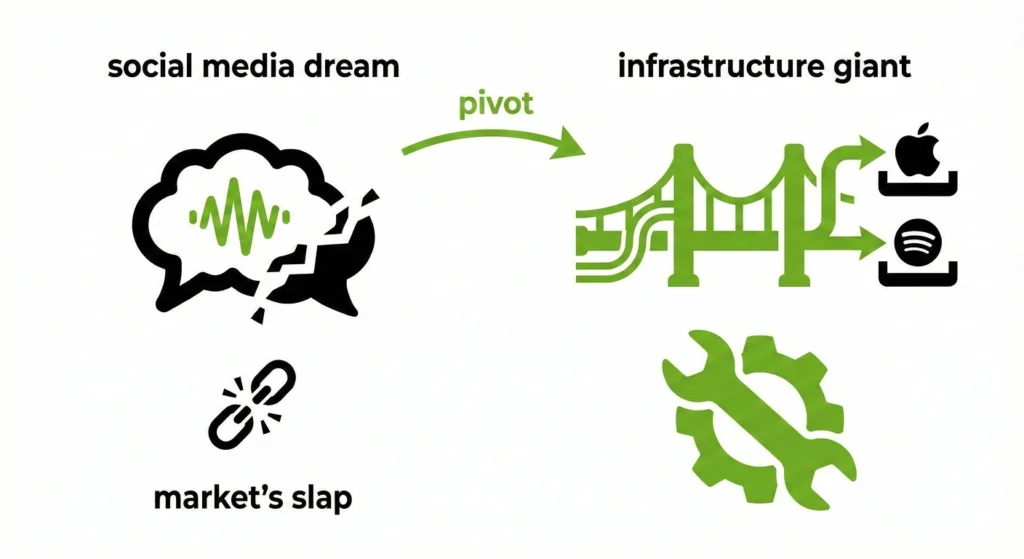
Anchor set out in 2014 to be the “Instagram of audio.” They wanted people to record audio and socialize within the platform. However, the data was brutal: People loved Anchor for creating content, but they preferred Apple Podcasts and Spotify for consuming (listening to) it. With the company on the brink of failure, the team made a radical decision: The Week-over-Week Growth (15%) rule.
To hit this target, they put their “social network” ego aside and focused on what users actually wanted (easily transferring content to Spotify). Initially, this process was done manually (unscalable), but this was the path that saved the company and led to the Spotify acquisition.
Furthermore, their manual creation of RSS feeds to send to Apple is a literal application of Paul Graham’s advice: “Do things that don’t scale.” Sometimes innovation lies not in technology, but in the courage to solve the customer’s pain manually.

3. The Distribution Paradox: AI Solves the Product, But What About Distribution?
AI makes product development and user retention easier. People are now willing to pay $20 or even $200 a month for AI-powered tools. However, the distribution problem is still on the table and harder than ever.
In the 2012-2014 period, platforms (Facebook, Twitter) closed their APIs, cutting off the free distribution tap. This was one of the most critical turning points, where social media giants shifted from an “open platform” approach to a “walled garden” approach and throttled free distribution.
If you are founding a consumer startup today, “organic growth” is almost a myth. According to Mignano, it is no longer a choice but a necessity (table stakes) for founders to use “inorganic” growth channels (TikTok influencers, anonymous X accounts, Reels creators).

Philip Kotler speaks clearly on Place (Distribution), one of the 4Ps of marketing: No matter how good the product is, its value is zero if it is not accessible.
Mignano’s observation that “Growth executives are no longer found in the US, but in Eastern Europe where tactical growth is still alive” is interesting. This indicates that while startups in the West fall into the “product perfection” trap, they have lost their distribution muscles.
In the AI era, the winners will not be those who build the best models, but those who deliver that model to the masses most intelligently (e.g., those engaging in “troll marketing” or building micro-influencer networks).
4. The Third Phase of Media: “Sora” and the End of Creativity?
We are entering the third and perhaps final stage in the evolution of social media:
Social Graph: Follow your friends (Facebook).
Interest Graph: The algorithm knows what you like and presents it (TikTok).
Generative Media: Content is created instantly for you by AI (The Sora Phase).
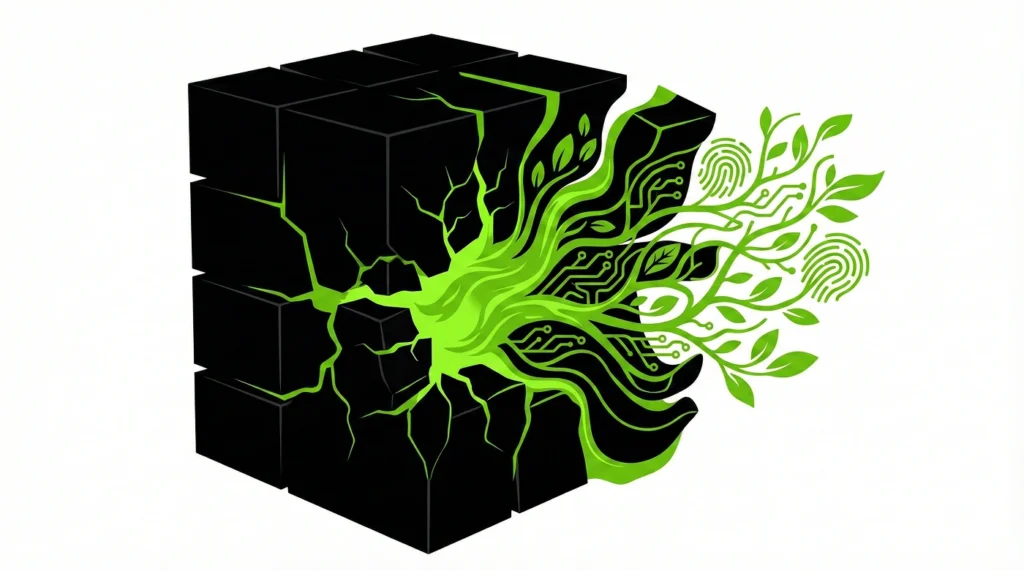
In this new era, the concept of the “content creator” is blurring. Users will simply put their “name rights” or “likeness” into the model as raw material, and AI will generate an endless, personalized stream.
This situation is the extreme point of Clayton Christensen’s “Disruptive Innovation” theory. Disruptive technology (AI) is eliminating not just the lower tier of the market (amateur creators) but the entire market (the production process). Media is transforming from something “produced” into something that “exists at the moment of consumption” (dynamic). This marks the end of “Mass Communication” and the beginning of “Individual Simulation” in marketing.
5. New Opportunity Area: “Graveyard” Datasets
The biggest opportunity for AI entrepreneurship lies in “large datasets” that everyone looks at but no one touches. Health data (Apple Health), photo galleries (Camera Roll), emails… These categories were known for years as the “startup graveyard.” However, the ability of LLMs (Large Language Models) to make sense of this data has changed the game.
For example, apps that process a blood test PDF or Apple Health data to offer insights faster and more comprehensively than a doctor are creating a revolution in consumer health.
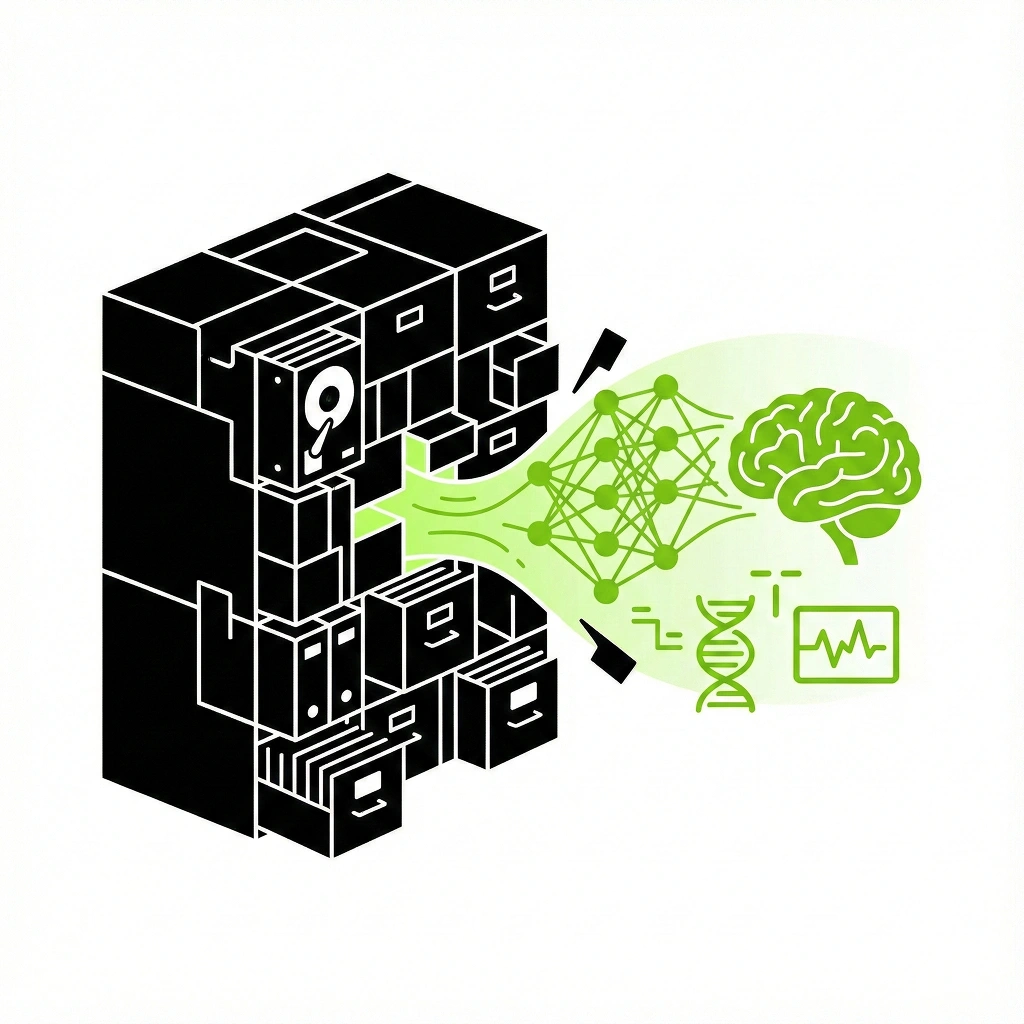
Peter Drucker points to “Process Need” as a source of innovation. The current healthcare system is successful at producing data (tests, watch data) but fails at processing it (turning it into meaningful information).
The opportunity here for entrepreneurs is not to “hold the data,” but to add an “intelligence layer” on top of it. Dennis Crowley’s (Foursquare founder) vision of a headphone assistant combining location data with AI to say “I know you like coffee here” is the transformation of data into contextual intelligence.
6. Obo Labs: Investing in Human Intelligence

Mike Mignano’s new venture, Obo Labs, aims to use the trillions of dollars of AI investment to augment “Human Intelligence.”
Until now, education has been a “one-size-fits-all” model. Obo creates instant, personalized courses on any subject you want to learn, tailored to your knowledge level and learning style (podcast, article, lesson).
This is placing a technological ladder against the peak of Maslow’s Hierarchy of Needs (Self-Actualization). It is a transition from the age of Standardization in education to the age of Hyper-Personalization.
Mignano’s vision distinguishes itself by positioning AI not as a tool that replaces humans, but as a lever that increases human capacity.
7. Conclusion: Where to Start?
The message is clear:
Don’t Underestimate Distribution: Even if the product is perfect, you must use inorganic channels (influencers, growth hacks).
Look at Dead Categories: AI is revitalizing boring and old fields (email, health records).
Be Fast: Face the market’s brutal facts early with the 15% growth rule or similar aggressive metrics.
In the AI era, the winners will not be those who use technology best, but those who bring technology together with human needs (and culture) at the right time.