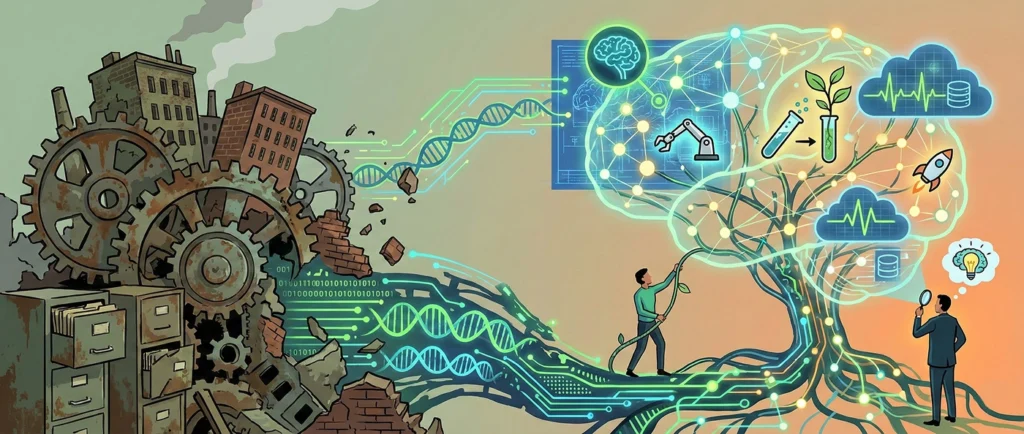
The global pharmaceutical industry has entered the era of “The Great Rebuild,” one of the most radical transformation phases in its history, which has started to crystallize as of 2026. Having been tested by post-pandemic supply chain crises and inflationary pressures between 2020 and 2025, the sector is now moving out of a defensive position to build a new “operating system” through the fusion of artificial intelligence (AI), synthetic biology, and digital transformation. This transition mirrors what I describe as “The Great Rebuild”: a shift from rigid, machine-like organizations to living systems that sense, learn, and adapt in real time.
The traditional cycle of “R&D, patent, sell” is giving way to the “TechBio” model, which is data-driven, continuously learning, and treats biology as an engineering discipline. According to BCG analyses, AI has become not just an experimental tool, but a fundamental “lever” that companies use to create competitive advantage. Decisive factors in this transformation include metabolic disease giants like Eli Lilly and Novo Nordisk altering the capital structure with valuations exceeding half a trillion dollars, and oncology giants like Pfizer and Roche maximizing operational efficiency through “Agentic AI” investments.
Concurrently, regulations by the FDA and EMA that significantly relax the comparative clinical efficacy studies—which had been mandatory for biosimilars for many years—are democratizing competition by tearing down market entry barriers.
Part 1: Macro-Strategic Outlook of the Global Pharmaceutical Industry (2026)
1.1. From “Machine” to “Organism”: The Evolution of Corporate Structures
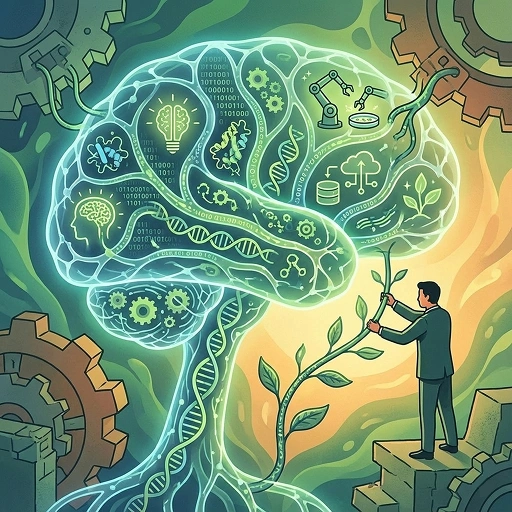
The pharmaceutical companies of the past century were massive “machines” managed through linear, mechanical, and siloed structures. However, the 2026 vision indicates that these structures are giving way to the “Organism Company” model, where data flows continuously like a circulatory system, decisions are supported by autonomous nervous systems (AI Agents), and symbiotic relationships are established with the external ecosystem (startups, academia). As emphasized in BCG’s “Agentic AI” report, in this new model, companies do not merely produce drugs; they combine data, biology, and technology to adapt and evolve like a living organism. This same machine-to-organism transition has already begun reshaping corporate architectures across industries, from manufacturing and retail to finance and wealth management.
1.2. The Impact of Obesity and Metabolic Wars on Capital Markets
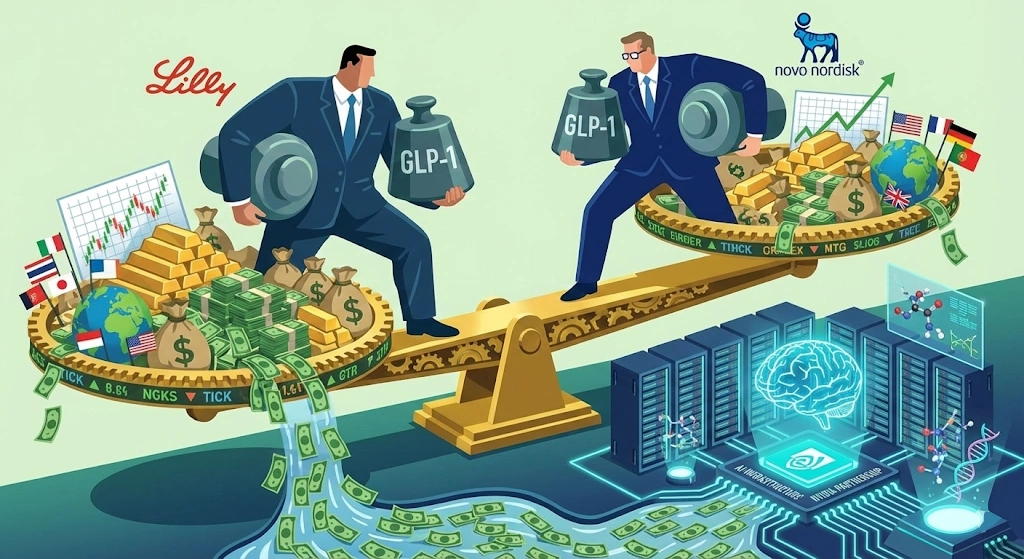
2025 was the year competition peaked through GLP-1 agonists (weight loss and diabetes drugs). Eli Lilly and Novo Nordisk’s market capitalizations exceeding the GDPs of many nations shifted the sectoral balance of power. According to Xtalks’ analysis, this massive cash flow is being channeled in 2026 into new modalities (gene therapies, non-incretin mechanisms) and massive AI infrastructures. In particular, Eli Lilly’s partnership with NVIDIA has enabled the construction of supercomputers capable of performing trillions of molecular simulations per year, transforming AI from an “experiment” into a fundamental infrastructure. The real strategic divide is no longer between companies that use AI and those that do not, but between those that remain stuck in pilots and those that successfully scale AI into the core of their operations.
Part 2: The Artificial Intelligence Paradigm – “Agentic AI” and Generative Biology
Chapter 2: The Artificial Intelligence Paradigm – “Agentic AI” and Generative Biology While 2023-2024 was the era of “Generative AI” (ChatGPT, etc.), 2026 is the era of “Agentic AI” (Autonomous Agents)—systems that do not just generate content but make decisions, plan, and take action.
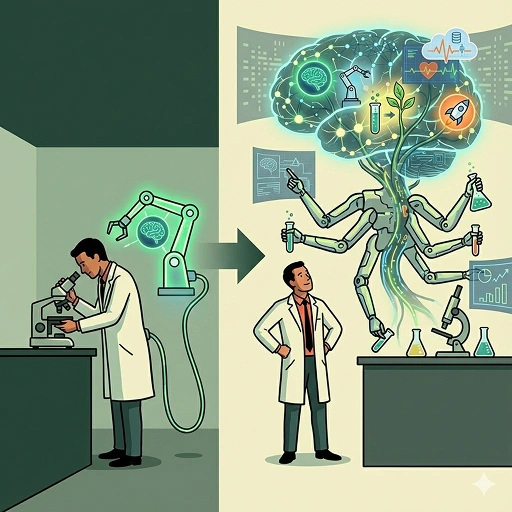
2.1. Agentic AI: The New Manager of the Laboratory While traditional Large Language Models (LLMs) provide information, Agentic AI can execute complex tasks autonomously. According to MobiHealthNews’ 2026 predictions, these agents are transitioning from a “co-pilot” role to an “autonomous partner” role in every field, from clinical decision support systems to administrative workloads. For instance, Y Combinator-backed startups like Scoop automate the thousands of pages of IND applications that pharmaceutical companies submit to the FDA, reducing bureaucratic processes that used to take months down to weeks. The fact that the total number of Biotechnology startups backed by Y Combinator reached 122 as of December 2025 is also a significant signal regarding the direction of the pharmaceutical industry’s transformation.
2.2. Generative Biology: Recoding Nature
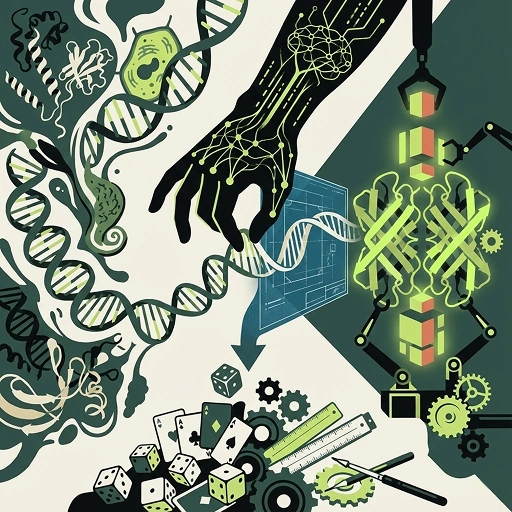
The philosophy of “Biology as Engineering” is the most dominant scientific trend of 2026. By examining proteins that have evolved over millions of years in nature, AI designs “de novo” (from scratch) proteins that have never existed in nature. As stated by Mike Nally, CEO of Generate:Biomedicines, this technology transforms drug discovery from a game of “chance” into a predictable engineering process. Similarly, the open-source OpenCRISPR-1 developed by Profluent has democratized gene-editing tools, initiating biotechnology’s “Linux moment.”
2.3. “Lab-in-the-Loop”: The Robotic
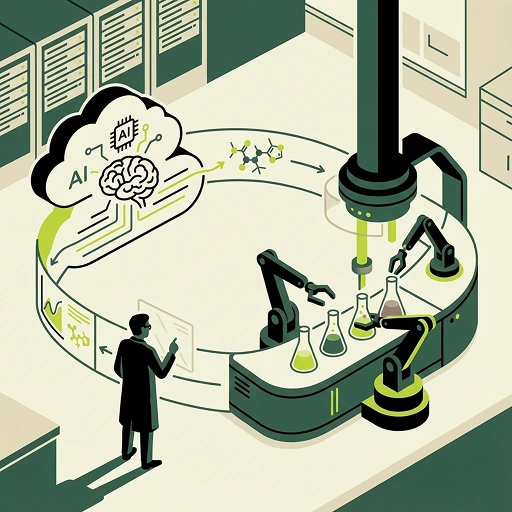
Revolution The power of software is combining with the speed of hardware. “Cloud Laboratories” like Strateos or Emerald Cloud Lab synthesize and test AI-designed molecules using robotic arms without human intervention, feeding this data back into the AI to close the learning loop.
Part 3: Global Investment Climate and Startup Ecosystem
Venture Capital (VC) markets have entered a trend of “selective and smart” growth in 2026. Investors are now focusing not just on companies that discover a single molecule, but on “platform” companies that radically transform the molecule discovery process itself.
3.1. Y Combinator and Techstars: Next-Generation Incubation Trends The world’s most prestigious accelerator programs, Y Combinator (YC) and Techstars, have radically altered their portfolios during the 2025-2026 period.
Y Combinator (F2025 & S2025): The “Bits to Bio” (Software to Biology) trend dominates YC’s new era. Startups like Scoop, which develop regulatory agents, and Anto Biosciences, which builds foundation models for the microbiome, are the new favorites of investors.
Techstars: In Techstars’ 2025 cohort, digital health and “Hospital at Home” solutions stand out. AI-powered clinical operating systems like Valene Health and chronic disease management platforms like CIPRA.ai are accelerating the transition of healthcare services out of the hospital setting.
3.2. Big Pharma’s M&A Strategy
Big pharma companies are using startups as “R&D engines” to close their innovation gaps. According to Dealforma data, M&A strategies in 2026 have shifted away from mega-mergers toward “Bolt-on” acquisitions focused on specific technologies. Novartis’ deal with Lindy Biosciences is the clearest example of this strategy; the company acquired not the drug itself, but the technology that makes that drug easier to administer.
Part 4: 20 Game-Changing Startups on the Radar of Big Pharma and Investors
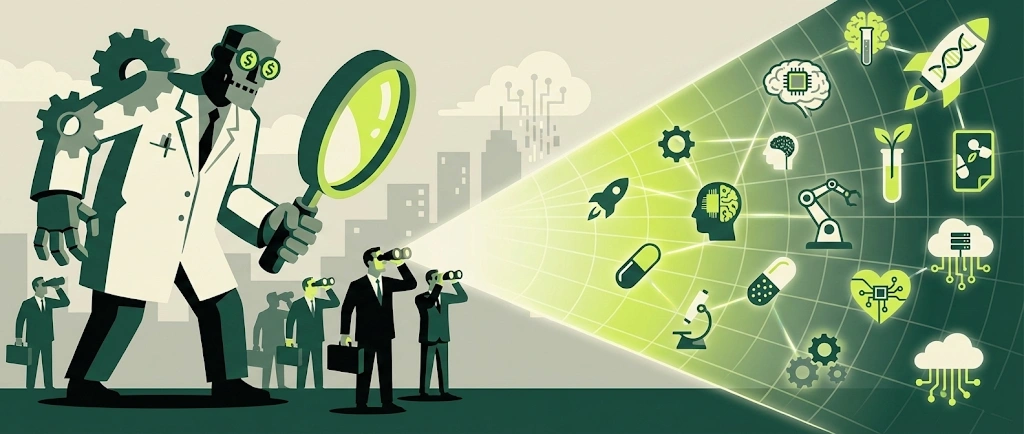
The following list contains the 20 most critical startups being closely monitored by giant pharmaceutical companies and investors in 2026, distinguished by their technological depth and industrial collaborations.
1. Generate:Biomedicines (USA): Designing proteins not found in nature from scratch using its “Chroma” platform, the company positions itself as the leader in generative biology through massive agreements with Amgen and Novartis. CEO Mike Nally emphasizes that their technology has initiated the era of “programmable biology.”
2. Profluent (USA): Known as the “ChatGPT of biology,” Profluent designs gene-editing tools (OpenCRISPR) using artificial intelligence. Working with Corteva on agriculture and pharma giants on therapeutic proteins, the company has raised over $100 million in investment.
3. Lindy Biosciences (USA): Making headlines with a deal worth up to $1 billion with Novartis, the company converts biological drugs that require hospital-based intravenous administration into subcutaneous injections that can be administered at home, thanks to its “microglassification” technology.
4. Superluminal Medicines (USA): Having signed a $1.3 billion deal with Eli Lilly, the company develops new drugs for obesity and heart diseases by modeling the most challenging cell surface receptors (GPCR) using AI.
5. Scoop (USA – Y Combinator): The star of YC’s F2025 batch, Scoop dramatically shortens drug development timelines with AI agents that automate FDA applications (IND).
6. Deep Apple Therapeutics (USA): With an $812 million discovery agreement with Novo Nordisk in the obesity field, the company revolutionizes virtual molecule screening by processing Cryo-EM images with deep learning.
7. IonKraft (Germany): Serving as an indicator that Big Pharma focuses not only on molecules but also on technologies managing Scope 3 and regulatory risks, IonKraft offers a solution to the pharmaceutical industry’s plastic waste problem. Its proprietary plasma coating technology endows plastic packaging with glass barrier properties, making them 100% recyclable.
8. Evox Therapeutics (UK): Using “exosomes”—the body’s natural cargo packages—to deliver drugs to the brain (by crossing the Blood-Brain Barrier), Evox conducts billion-dollar collaborations with Eli Lilly and Takeda on neurological diseases.
9. Anto Biosciences (USA – Y Combinator): A YC F2025 startup, Anto takes personalized medicine a step further by predicting the effects and toxicity of drugs on the gut microbiome using a “Foundation Model” developed specifically for the microbiome.
10. AcousticaBio (USA): A LabCentral alumni, this startup uses sound waves to convert viscous biological drugs into painless injections, attracting the attention of giants looking to reformulate drugs with expiring patents.
11. Gameto (USA): Stopping the “Biological Clock” in Women’s Health. Using cellular engineering to delay ovarian aging and erase the effects of menopause, Gameto has transformed “FemTech” from a consumer product category into a serious biotechnology field. The platform developed by the company offers a technological response to demographic crises by extending women’s fertility window.
12. RS Research (Türkiye): Smart Chemotherapy and Targeted Delivery. As Turkey’s pride in Deep Tech, RS Research, led by Prof. Dr. Rana Sanyal, packages chemotherapy drugs using its proprietary Drug Delivery platform so that they become active only after entering the tumor cell. Moving to human clinical phase studies with its candidate molecules (PDCs), the company establishes a model of exporting technology from Turkey to the world.
13. Enbiosis (Türkiye/UK): Decoding the Microbiome with AI. Offering personalized health and therapeutic solutions by feeding AI algorithms with human gut microbiome data, Enbiosis is one of the most successful examples of combining biotechnology with “big data.” Their AI engine, developed not just for nutrition but for the modulation of specific diseases, is attracting the attention of global health authorities.
14. Verge Genomics (USA – Techstars Alum): Neurological Discovery with Human Data. One of the most successful biotech startups to come out of Techstars, Verge Genomics skips animal models to analyze human brain tissue data directly with artificial intelligence. Particularly in complex neurological diseases like ALS and Parkinson’s, it abandons the traditional “trial-and-error” method in favor of a fully data-driven discovery process.
15. Resilience (USA): The AWS of Biology (Supply Security). This company is the biggest player in the “Geopolitical Manufacturing” trend of 2026. Providing modern, flexible, and high-tech manufacturing infrastructure for pharmaceutical companies, Resilience serves as the backbone of the project to regain Western pharmaceutical manufacturing sovereignty following the “Biosecure Act.”
16. Isomorphic Labs (UK): Google DeepMind’s Drug Arm. Led by the team behind AlphaFold 3 technology, Isomorphic Labs has turned biology’s greatest mystery into an engineering problem by solving protein folding in seconds. Billion-dollar agreements with Eli Lilly and Novartis have positioned them as the industry’s “digital brain.”
17. Cradle (Netherlands): Programmable Protein Design. Founded by former Google AI employees, Cradle uses “Generative AI” to make enzymes and antibodies more durable and effective. The company democratizes laboratory processes with an interface that allows biologists to design complex protein structures as if writing code.
18. Biofourmis (USA): Hospital at Home Leader. Biofourmis is the most critical player in alleviating the financial burden on health systems by enabling early patient discharge and 24/7 home monitoring via sensors and AI analytics. Their “Digital Biomarker” work with pharmaceutical companies is becoming the gold standard for measuring a drug’s real-world impact.
19. Mammoth Biosciences (USA): CRISPR 2.0 and the Diagnostic Revolution. Founded by Nobel laureate Jennifer Doudna, Mammoth Biosciences uses CRISPR technology not just for gene editing but as a “search engine” that detects diseases at the molecular level. The ultra-small Cas enzymes they have developed make in-vivo (inside the body) gene therapies significantly safer.
20. Insilico Medicine (Hong Kong/USA): End-to-End AI Success. This is the company that brought the first drug discovered, designed, and clinically planned by artificial intelligence (for Idiopathic Pulmonary Fibrosis) to Phase 2. It represents the sector’s most concrete success story, answering the question “Can AI find drugs?” with a proven “Yes, it found one and is testing it on patients.”
Part 5: Regulatory Earthquake and Green Future
5.1. The “Berlin Wall” Has Fallen in Biosimilars
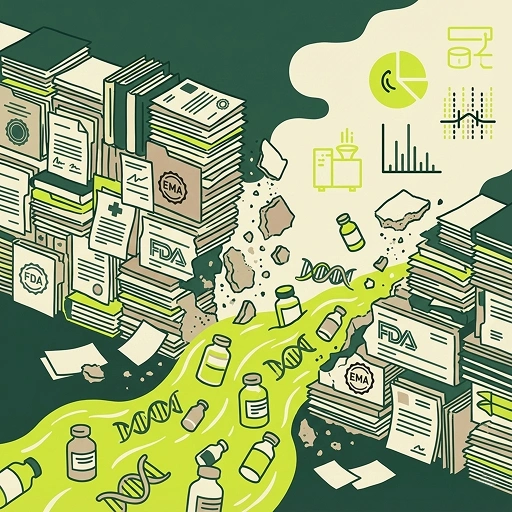
The year 2026 is witnessing a revolutionary regulatory change in the world of biological drugs. The FDA and EMA have largely eliminated the Comparative Clinical Efficacy Studies that were mandatory for years for biosimilar drug approval. According to BioPharmaSpec and FDA announcements, advanced analytical data (mass spectrometry, etc.) is now considered sufficient to prove similarity. This decision drastically cuts drug development costs by millions of dollars and shortens time-to-market by years.
5.2. Sustainability: “Scope 3,” The Green Deal, and The Biosecure Act In 2026, sustainability has evolved from a “public relations” topic into a financial imperative. According to a My Green Lab report, a vast majority of the pharmaceutical sector’s carbon footprint stems from the supply chain (Scope 3). Furthermore, with the adoption of the ICH Q13 guideline, “continuous manufacturing” technologies are accelerating the green transition by reducing energy consumption.
In 2026, sustainability is not just an environmental issue but a strategic security matter.
Green Deal: A large portion of the pharma sector’s carbon footprint originates from the supply chain (Scope 3). In this context, sustainable packaging technologies like IonKraft or startups producing bioplastics from seaweed like Kelpi have become critical partners for companies to reach their “Net Zero” goals.
Impact of the Biosecure Act: The US and Europe’s strategy to reduce reliance on East Asia in drug manufacturing (Biosecure Act) has boosted investment in local and reliable manufacturing technologies. This situation multiplies the value of Western-based CDMOs and next-generation manufacturing technologies.
Conclusion: Building the Future
As we enter 2026, the picture before the pharmaceutical industry is becoming increasingly clear: The era of the “Machine” has ended, and the era of the “Organism” has begun. The winners of this new era will be those who accelerate with AI tools like Scoop and Profluent, those who deliver medicine to patients with technologies like Lindy Biosciences, and those who respect the planet with solutions like IonKraft.
The message for investors is clear: The future lies not just with those who find the drug, but with the “platform technologies” that radically transform the process of finding, manufacturing, and delivering the drug to patients.