Throughout history, the business world has faced crises: oil shocks, financial crashes, pandemics. However, what is happening today is not a crisis, but a structural rupture. The problem is no longer “managing better” or “being more efficient”; it is trying to survive with the wrong type of organism.
Decades ago, Peter Drucker, one of the founders of modern management thinking, issued this warning: “The greatest danger is mistaking yesterday’s successes for tomorrow’s strategy.” Today, in the age of Artificial Intelligence, this is exactly the risk companies face. The machine logic that worked yesterday does not move companies forward today; it slows them down.
This article was written not to explain technology, but to show how the nature of the organization, labor, and competition is changing. Because the issue is not software; it is the management mindset.
Introduction: The Metamorphosis of the Caterpillar into a Butterfly
In the past, when “digital transformation” was mentioned in the business world, the thought was: Let’s buy new computers for the company, set up a website, and maybe add accounting software. This is like a caterpillar trying to walk faster. No matter how much it speeds up, it is still a caterpillar.
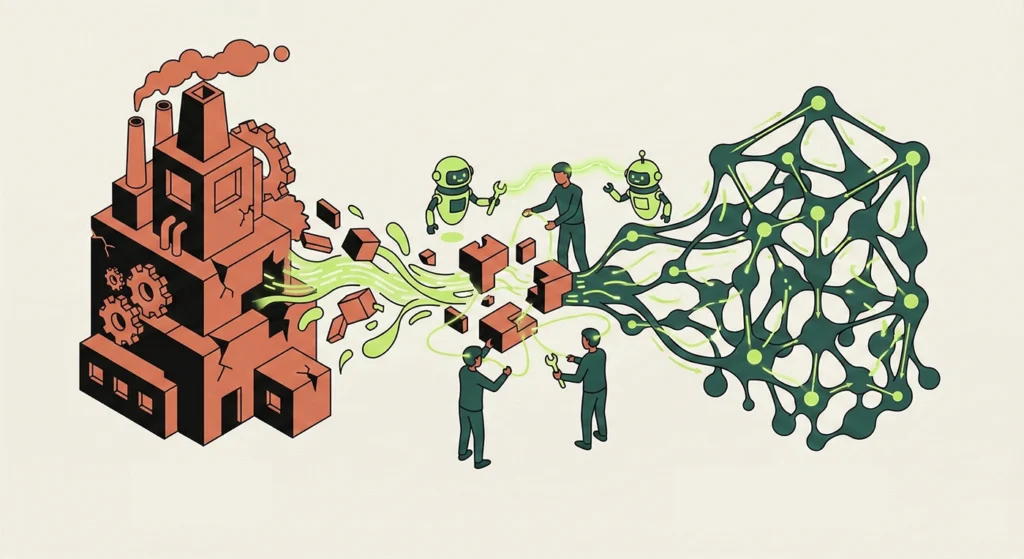
What Deloitte calls “The Great Rebuild” today is something completely different. It is no longer enough for the caterpillar to walk faster; it must learn to fly—that is, it must transform into a butterfly. In the AI era, companies are forced to transform from cumbersome machines running on chains of command into “living organisms” that sense, learn, and react instantly.
Related case study: This “living organism” shift becomes measurable when AI turns into agents that drive growth—see the FINNY AI case study: The Renaissance of Wealth Management in the Era of Vertical AI (FINNY AI).
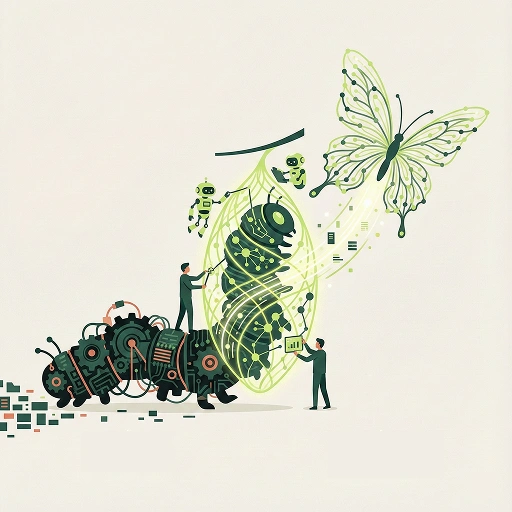
As Charlie Galunic, a professor at INSEAD Business School, notes in his book “Backstage Leadership – The Invisible Work of Highly Effective Leaders,” building, maintaining, and integrating these processes is the key, yet sometimes invisible, backstage work of business leaders. This transformation requires leaders not only to make visionary speeches on the front stage but also to “re-plumb the organization” backstage. The leader’s real job is to build these invisible processes.

This transformation is not just at the theoretical level; it finds concrete equivalents in the organizational architectures of the world’s largest tech companies. In the final quarter of 2025, Google explicitly accelerated this approach in the EMEA region, positioning AI not just at the product layer, but at the center of marketing, decision-making, and organizational reflexes.
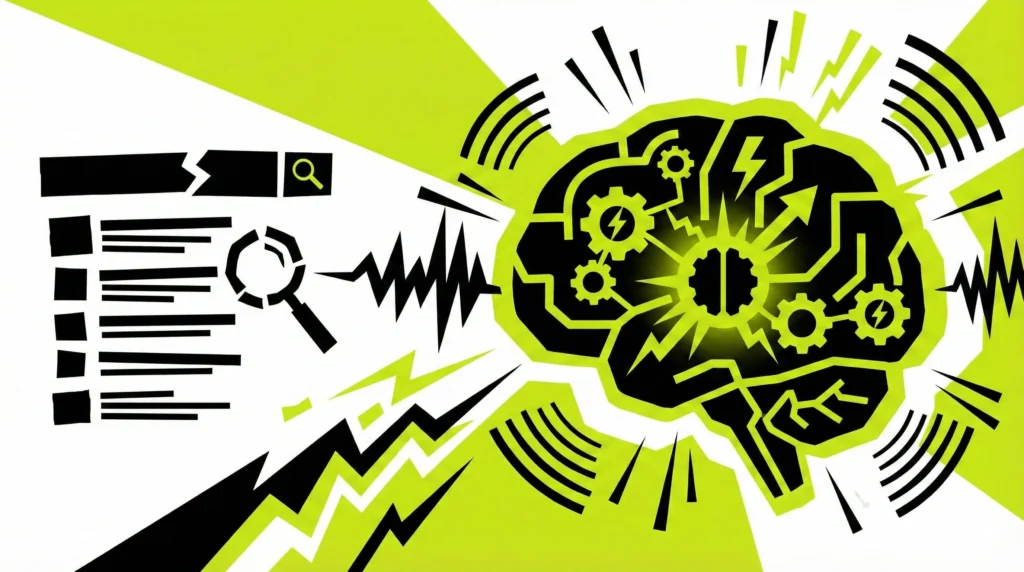
Yonca Dervişoğlu, Google EMEA Vice President of Marketing, defines this process as the industry’s transition from the “Wow” phase to the “How” (Implementation) phase. The significant increase in search queries for “How to use AI” is the clearest indicator that companies have stopped merely watching the technology and started building with it. As Dervişoğlu emphasizes, the fact that creative production processes, which used to take weeks, have dropped to seconds with AI, combined with dramatically reduced costs, transforms marketing from merely a “communication function” into the fastest-working part of the company’s nervous system. The goal is now not just to advertise, but to turn advertising into a genuinely “useful source of information” for the user.
In this article, we discuss why giants like Tupperware have disappeared, how next-generation startups like IonKraft are shining, the transforming giants, and how you need to change your company’s DNA to survive in 2026.
Part 1: A Stormy Economy and Two Different Worlds (The 2026 Landscape)
Philip Kotler, the father of marketing, says, “You cannot change the direction of the wind, but you can adjust your sails.” As we enter 2026, the economic winds are blowing hard.
1.1. Like a City of Rich and Poor: “The Two Economies”
There is a strange situation in the economy. According to Vistage reports, the business world is split right down the middle:
High Performers: These are the ones who have placed AI at the heart of their business, delegating tasks to machines and increasing their profits.
The Traditionalists (Those Left Behind): Those working old-school, complaining that “I can’t find staff, raw materials are too expensive,” and merely trying to survive.
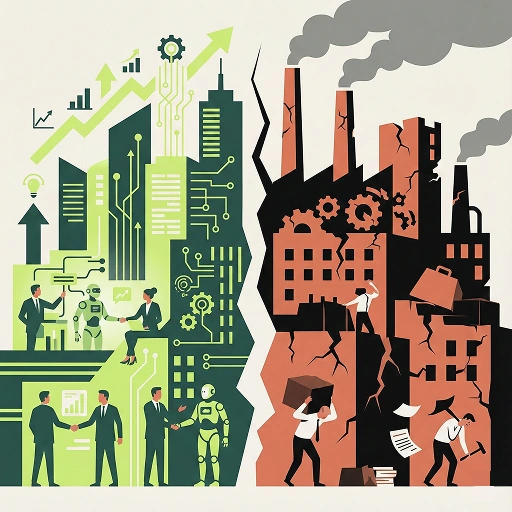
While tech giants spend hundreds of billions of dollars just on data centers, companies on the other side of the apocalypse are being crushed under rising costs. In short, you will either accelerate with technology, or costs will swallow you whole.
1.2. The Customer is Now Highly Informed: “Smart Discretion”
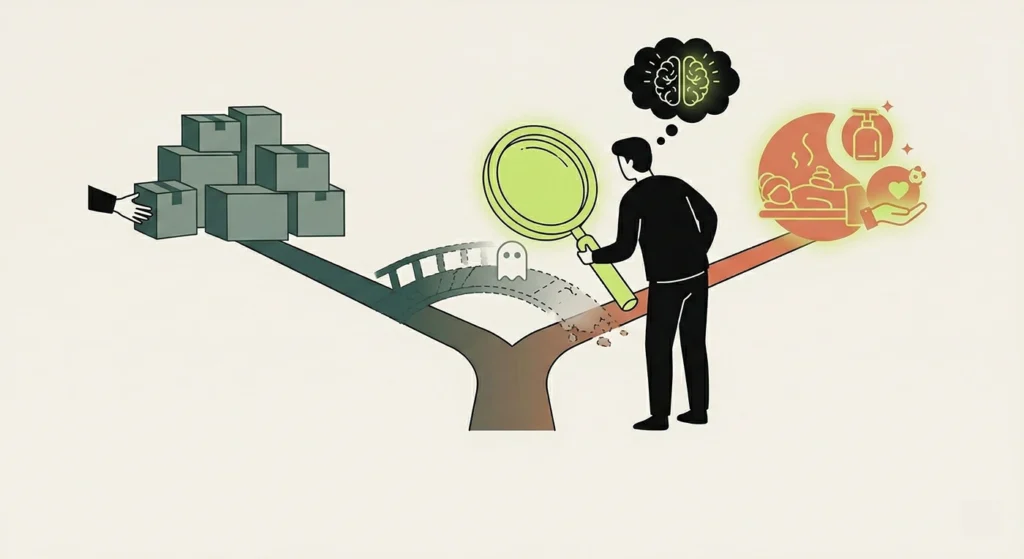
In the past, customers would either buy everything expensive or everything cheap. Now the situation has changed. The consumer is exercising “Smart Discretion.”
Are they buying toilet paper or detergent? They go for the cheapest, private-label option.
But if it’s about health, experience, or feeling good? They spend their money without hesitation.
What does this mean? If your company is not the “absolute cheapest” or the “most exclusive”—that is, if you are in the middle (as we will see in the Tupperware example)—you fall off the customer’s radar. The “middle segment” is melting away.
Google’s EMEA-focused consumer insights published throughout 2025 show that the concept of “Smart Discretion” has become the norm rather than the exception. Analyses conducted specifically through YouTube, Search, and shopping data clearly reveal that consumers act price-focused on daily needs, but value-and-meaning-focused on products involving identity and experience. This behavior indicates that marketing strategies can no longer be constructed on the assumption of an “average customer.”
1.3. The “Nobody Quits, Nobody Gets Hired” Deadlock

The job market is in a gridlock. Companies, fearing they “can’t find quality talent,” aren’t laying anyone off, while employees, thinking “the market is bad,” aren’t changing jobs. In this stagnation, there is only one way to increase efficiency: Empowering current employees with “Superpowers.” In other words, giving them AI assistants.
OpenAI’s State of Enterprise AI research, published in December 2025 and covering 9,000 employees across nearly 100 companies, shows that this transformation is now measurable. According to the research, the top 5% of intense AI users (power users) engage in 6 times more productive interactions and report saving over 10 hours per week compared to the average employee.
This difference doesn’t stem from access, but from depth of usage. Everyone has the same tools, but not everyone is doing the same work. In Drucker’s words, the issue is not “working harder,” but doing the right work in the right way. Thus, the productivity gap is forming not between people, but between how organizations position AI.
Part 2: The New Corporate Architecture: From Machine to Organism
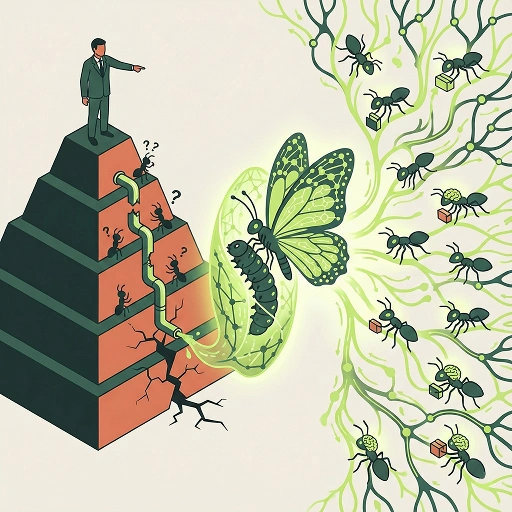
In the past, companies were depicted like a “factory machine”: The boss at the top, managers below, and workers at the bottom. Everyone simply turned their own gear. But Deloitte says; this model is dead. Companies must now function like a biological “nervous system.”
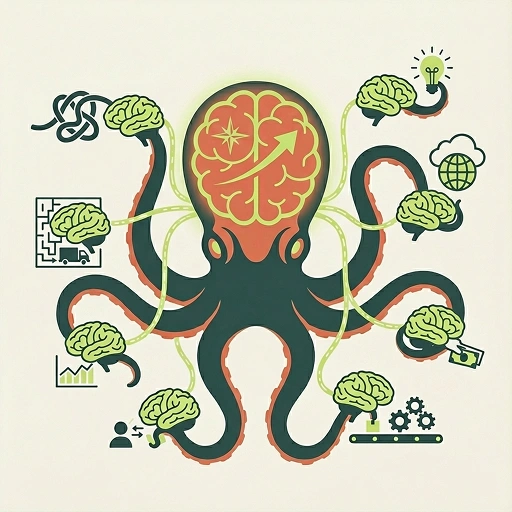
2.1. The Nine-Brained Structure: “The Octopus Model”
Stephen Wunker’s analysis in the 2026 Visionaries issue of FastCompany Turkey explains organizational transformation with a perfect metaphor: “The Octopus Organization.”
While traditional companies are managed by a single brain (CEO/HQ), the company of the future must operate like an octopus. An octopus has nine brains; one in the center, and eight in its arms. These brains in the arms can make autonomous decisions, hunt, and navigate obstacles without asking the center.
This is exactly what AI Agents (Agentic AI) are.
Central Brain (Management): Sets the grand strategy and vision.
Arms (Agents/Departments): Do not ask the center when resolving a customer complaint or managing a supply crisis; they act autonomously. As Wunker says, “The central brain doesn’t need to manage every arm; it focuses on more important strategies.”
2.2. Your New Colleagues: “Agents” (Agentic AI)
This part is crucial. Until now, AI (like ChatGPT) wrote poems or summaries for us. But the real revolution of 2025 is “Agents.”
What is an Agent? An Agent is a digital employee that thinks and acts on your behalf.
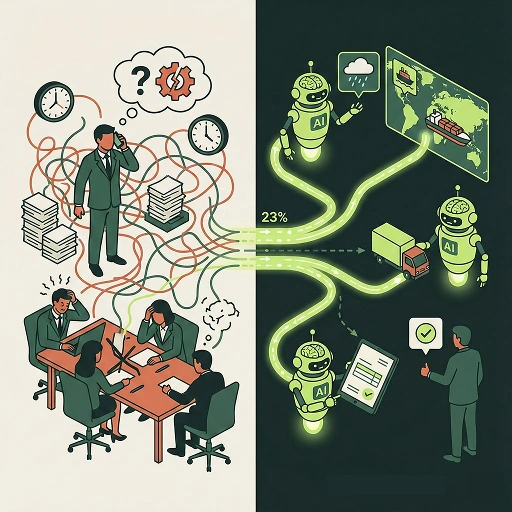
Old Way: When there is a problem, you call the manager, hold a meeting, and make a decision.
Agent Way: The “Supply Chain Agent” checks the weather, realizes the ship will be delayed, orders goods from another supplier without waking you up, and simply sends you a notification: “I handled the issue, your approval is here.”
McKinsey says 62% of companies are piloting these agents, but only 23% have truly integrated them into operations. The winners will be that 23%.
If you want the pilot → scale blueprint behind that “23%,” connect this section to: From Good to Great with AI: The Formula for Breaking Free from Mediocrity.
A concrete Vertical AI example of this logic in a regulated industry is FINNY AI—built to turn “signals” into meetings and organic growth: FINNY AI and the Global “Growth Engine” Revolution.
OpenAI data shows the gap is not just in general productivity, but at a precipice level in critical skills:
17x more interactions in software development,
16x more interactions in data analysis.
These people are getting ahead not because they are smarter, but because they use AI not as a passive tool, but as an active business partner.
At this point, Peter Drucker’s classic quote takes on new meaning: “The best way to predict the future is to create it.” Agents are the digital workers of this creation. Companies that leave them in the trial phase are watching the future; those that put them at the center of work are shaping the future.
In companies undergoing transformation, the most critical point is not just technology investment, but ensuring that all actors in the organization grasp what the “Great Rebuild” era means. This is possible through awareness programs, competency maps, and continuous education.
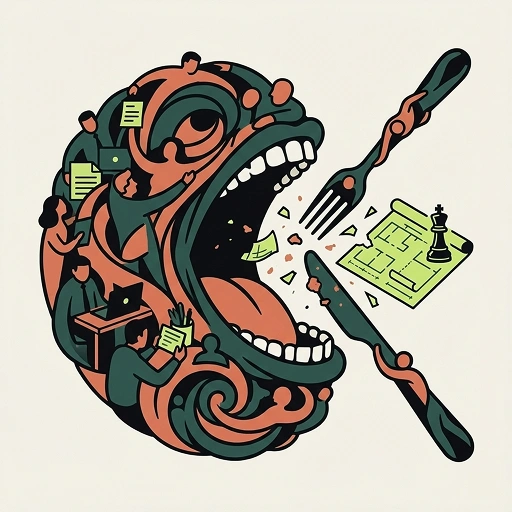
Otherwise, as Peter Drucker warned years ago, “Culture eats strategy for breakfast.” If the AI strategy is not aligned with the organizational culture, even the best architecture, the strongest agents, and the most expensive software cannot create the expected transformation.
While this truth is well appreciated by business leaders, what is often underestimated is just how much careful, “backstage leadership” is required to impact something as opaque and abstract as organizational culture.
In the age of AI, this rule hasn’t changed; only the speed and scale at which culture is tested has.
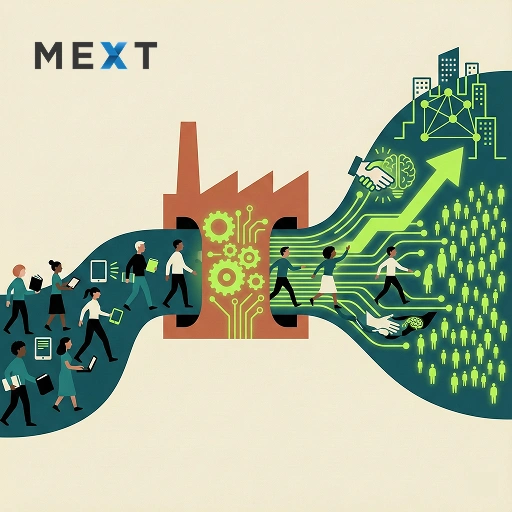
From this perspective, MEXT, launched in Turkey with the mission of “Accelerating Industrial Transformation,” offers an important example of making the AI revolution accessible to SMEs, students, and future professionals through free and open-participation training. Reaching over 34,000 participants to date, these programs and the twin transformation applications experienced at the Digital Factory in Istanbul Ataşehir play a critical role in preparing Turkish companies for the great rebuild period not only technologically but also humanly and culturally.
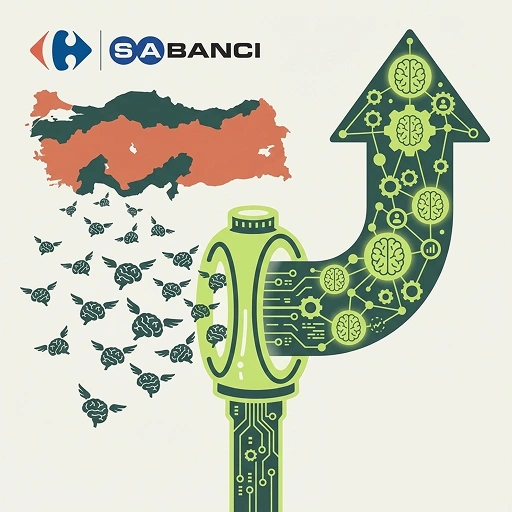
This framework also aligns with the steps taken by the Sabancı Group in education and competency development in recent years. Within the scope of the Sabancı Youth Mobilization carried out under Sabancı Holding, the CarrefourSA Technology and Impact Center, launched in cooperation with CarrefourSA and Kocaeli University, aims to present AI, data analysis, and digital transformation topics to young people with a broad and accessible education model. As emphasized by Orhun Köstem, Sabancı Holding Financial Group President and Chairman of CarrefourSA, this approach is a concrete reflection of the goal of “transforming brain drain into brain power.” Such centers provide important examples showing that AI transformation is possible not only with technology investments but with free and inclusive education that prepares human resources at an early stage.
2.3. Don’t Build on a Rotten Foundation (Architectural Debt)
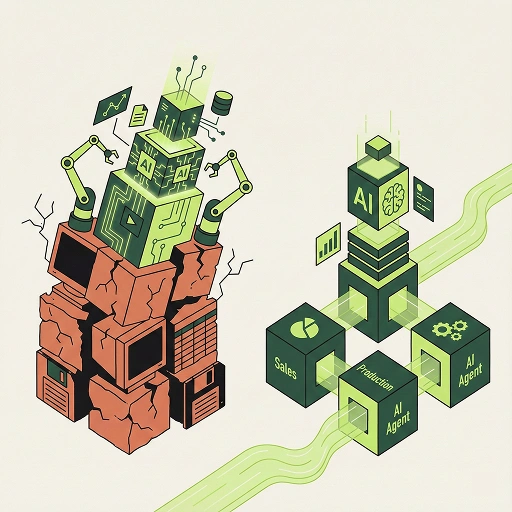
Most companies try to build AI on top of old computer systems (Excel sheets, legacy software). This is like adding a floor to a building with a rotten foundation. Deloitte calls this “Architectural Debt.”
The Solution: Your data must flow like a river. The production department must see the sales department’s data instantly so that the AI (Agent) can make the right decision.
This is one of the core reasons AI programs get stuck in “experimentation.” For the data behind the gap, see: From Good to Great with AI.
Part 3: Marketing 6.0: Capturing the Customer’s Heart
One of the areas where Marketing 6.0 is most clearly observed is how Google has redefined marketing with AI-powered decision engines in recent years. As of the last quarter of 2025, Google began positioning marketing teams in the EMEA region not merely as campaign creators, but as “decision partners” performing demand forecasting, scenario simulation, and instant optimization. This approach offers a living example of transforming marketing into the organism’s reflex mechanism.
Kotler always described marketing as human-centric. Now, in “Marketing 6.0,” technology enables us to understand humans better.
3.1. The Product’s Digital Twin
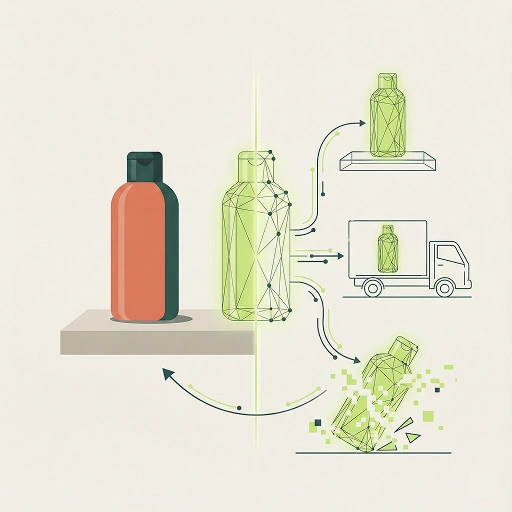
Now, before producing a shampoo bottle, we create its “digital twin” on the computer. We place this virtual bottle on virtual shelves, load it onto virtual trucks, and check if it breaks when dropped. Thus, we see the error without spending millions of dollars. Vistage calls this the “Virtual Simulation Revolution.”
This simulation doesn’t stop at the design stage; it descends into the production line itself. Food packaging giant Tetra Pak has created digital twins of the machines in its factories with a platform called ‘Factory OS’. The system continuously monitors 2,500 production lines globally in a virtual environment and detects faults before they occur (predictive maintenance). The result? Up to 40% improvement in waste reduction and millions of Euros in annual energy savings. In short, the factory acts not like a machine that stops and waits when there is a problem, but like an organism that senses the problem before it arrives.
3.2. Price: Instant Change Like the Stock Market
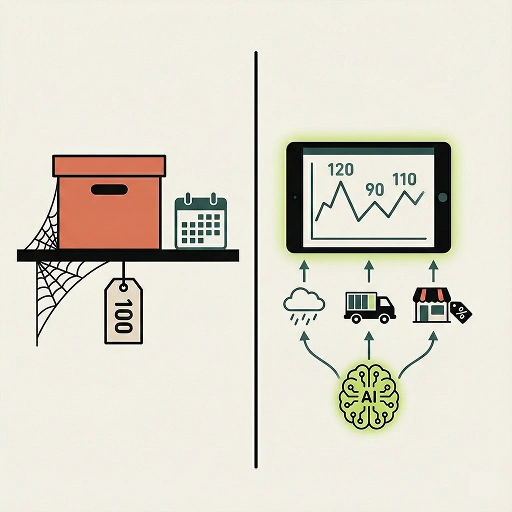
We used to write a price on a tag, and it would stay there for months. Now, companies like UPS, using a system they call “The Architecture of Tomorrow,” change prices instantly. Is it raining? Are the trucks full? Did a competitor offer a discount? AI updates the price in seconds.
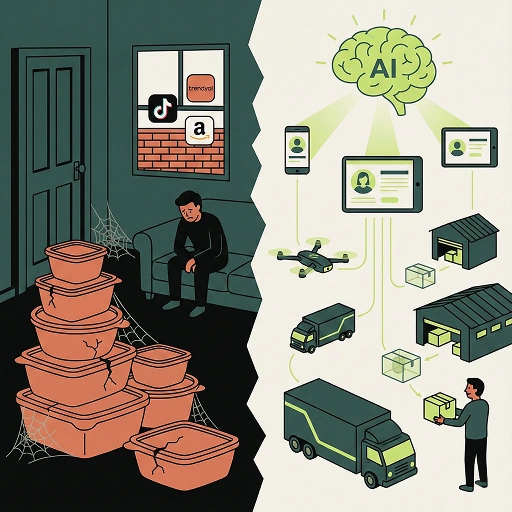
3.3. Distribution: Why Did Tupperware Fail?
Tupperware taught one of the century’s biggest marketing lessons (but in a bad way).
The Mistake: They said, “We only sell at home parties, hand-to-hand.” But their grandchildren were on TikTok, on Trendyol, on Amazon. Tupperware stubbornly refused to enter digital shelves. Result: Bankruptcy.
The Right Way: McKinsey calls it “Predictive Shipping.” AI predicts what the customer will want before they even order it and ships the product to the nearest warehouse.
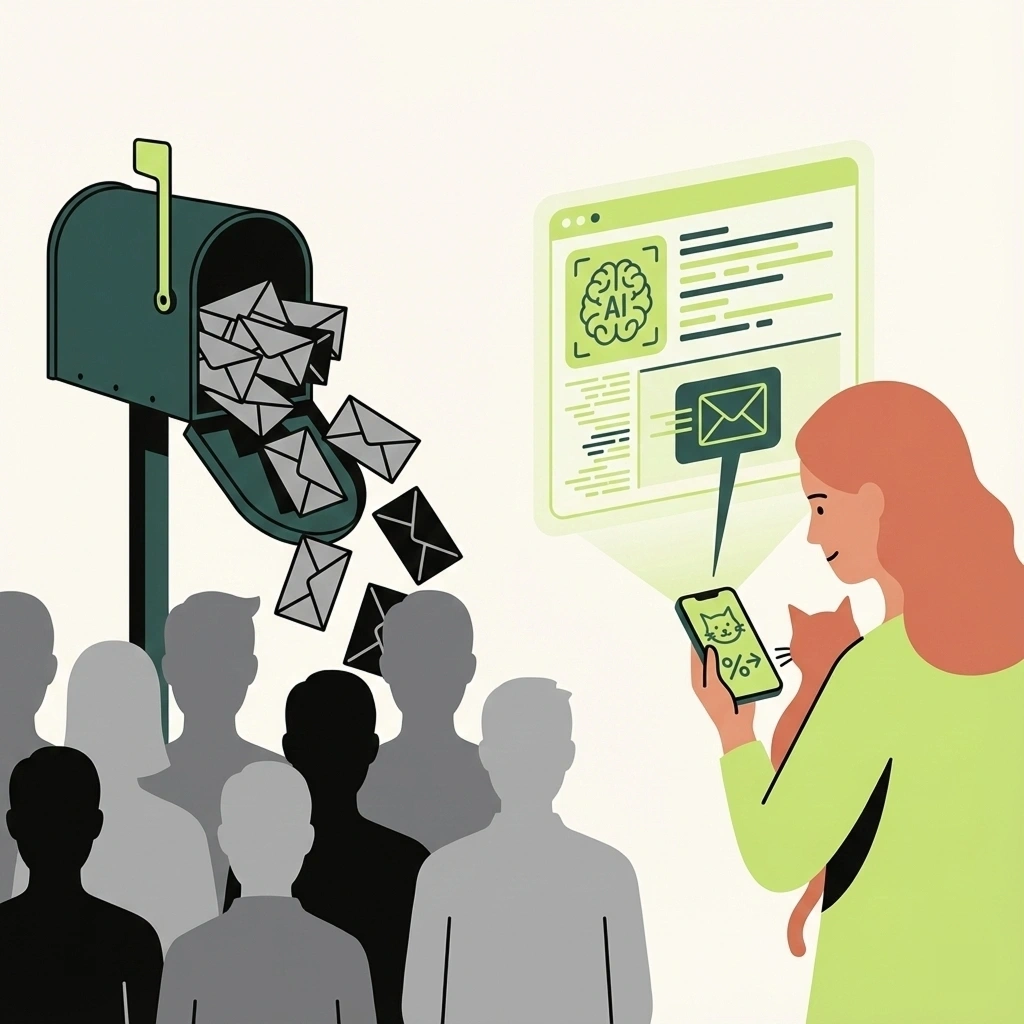
3.4. Promotion: A Personal Letter to Everyone
In the past, mass emails starting with “Dear Customer” were sent out. Now, AI can say, “Dear Ayşe, I predict the food you bought last month is about to run out, here is a 10% discount for your cat.” This is called “Hyper-Personalization.”
Part 4: Live Examples from the Industry: The Sinkers and the Risers
The packaging and plastics industry is where we see this shift most clearly.
4.1. The Losers Club
Tupperware: A victim of “Channel Myopia.” They failed to go where the customer was (digital). While young people were looking for “sustainable products,” Tupperware couldn’t reach them on social media. They were too busy managing debts to allocate funds for innovation.
Klöckner Pentaplast: A debt swamp. A giant packaging firm, but they had so much debt that they had no breath left to innovate. While competitors were switching to eco-friendly plastics, they were drowning in financial sheets. Result: Filed for bankruptcy protection.

4.2. The Winners Club (New Generation)
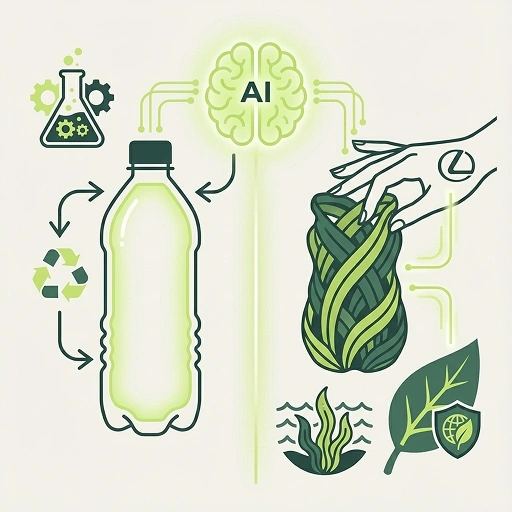
IonKraft: Power Born from Science. It was a university project (RWTH Aachen). They said, “Let’s coat the plastic with a glass-like thin layer (plasma); it will both protect and be recyclable.” Simple but revolutionary. They became the cure for the market’s biggest headache (recycling).
Kelpi: Solution from the Sea. They make plastic not from petroleum, but from seaweed. They introduced themselves not as “packagers” but as “climate warriors.” Giant brands like L’Oreal knocked on their door immediately because their story was strong.
4.3. The Transforming Giants
Established companies like Amcor, Berry Global, and Unilever did not fall into Tupperware’s error. They positioned AI not as a temporary technology or a side IT project, but as the organization’s nervous system. As a result, they became not just more efficient, but more adaptive and agile.
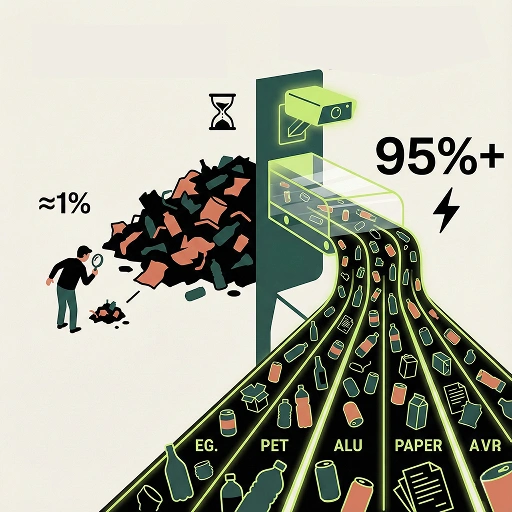
Amcor: The AI system by Greyparrot, with whom Amcor collaborates, can recognize and classify real-time waste flow with over 95% accuracy. This shows that AI can visualize complex waste components in an industrial environment at a level equivalent to or superior to humans. Traditional manual sampling, which covers only a tiny fraction (about 1%) of total waste, fails to provide a comprehensive and continuous data stream.
Berry Global: Berry Global increased its speed and flexibility by using autonomous robots and AI-supported operating systems in its production facilities. AI plays an active role not only in production but also in decision-making processes, from meeting summaries to operational reporting. Result: Shorter decision cycles, less coordination loss, and shifting human labor back to value-added areas.
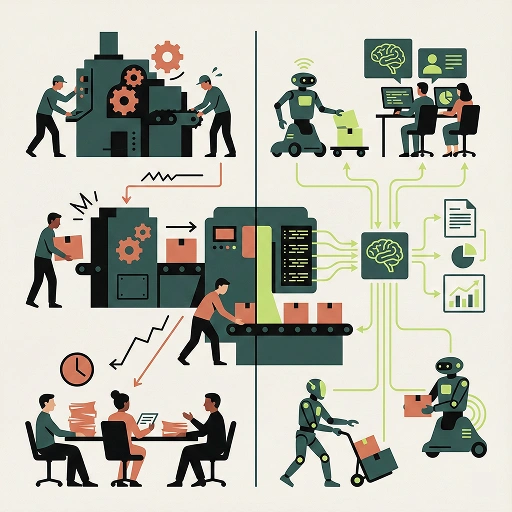
Unilever: Unilever became one of the first global giants to position AI not just as a marketing tool, but as an organizational nervous system.
Demand forecasting with AI in the supply chain,
Hyper-personalization in marketing,
Product formulation and simulations in R&D. Thanks to this holistic approach, Unilever can operate with lower stock, bring products to market faster, and respond much more agilely to changing demand. What brings success here is not “machine-like efficiency,” but “organism-like adaptability.”
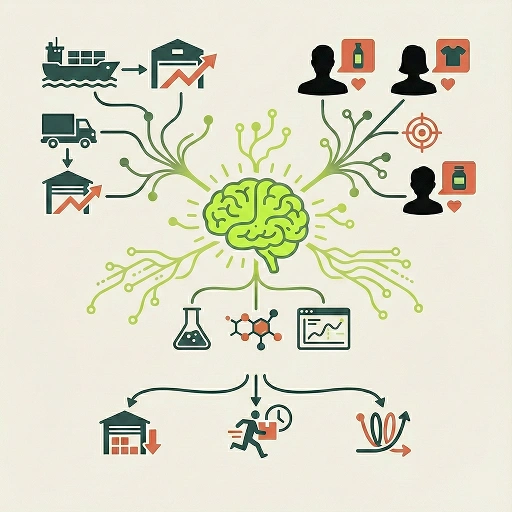
Tetra Pak: “The Factory Exporting Vision.” Tetra Pak produces not just boxes, but a data-driven “smart factory” model. As Eliseo Barcas, General Manager for Middle Eurasia, states, the company’s facility in İzmir serves as both a test laboratory and a regional knowledge base for this transformation.
Self-Updating Lines: Thanks to the “digital twin” technology used in pilot facilities in Spain and Turkey, production lines continuously learn and update themselves in a virtual environment.
Concrete Score: Through this “learning system,” water usage decreased by 22% and energy consumption by 15% at the İzmir factory.
Decision Support: The system, providing instant “real-time decision support” to operators, does not eliminate the human; it gives them “superpowers” to optimize production plans. Tetra Pak’s goal is clear: Zero waste in all operations by 2030. This is proof that they construe technology not as a ‘patch,’ but as the company’s DNA.
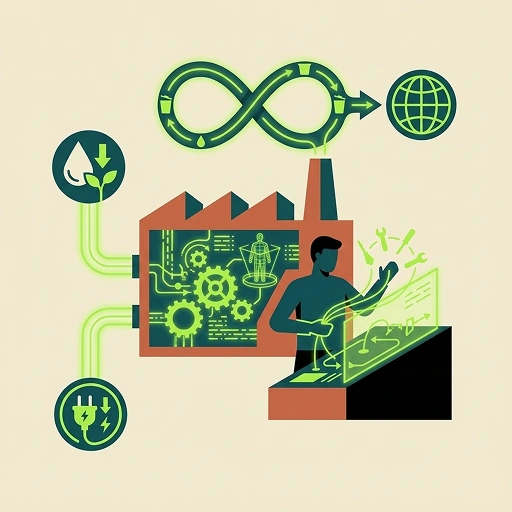
Koç Holding: According to 2025 CompaniesMarketCap data, Koç Holding, entering the list of the world’s top 500 companies with the largest workforce (132,447 employees), approached AI and data-driven transformation as a gradual process spreading across different business lines rather than isolated projects. With the leadership approach involving Özgür Burak Akkol since the early 2020s, AI applications deployed in various areas such as human resources, talent management, operational decision support, and corporate data infrastructures evolved into a structure that increases organizational capacity across the Koç Group by 2025. The fact that Akkol, in addition to his responsibilities as President of the Tourism, Food, and Retail Group at Koç Holding, holds a perspective touching the entire industrial and employment ecosystem through his presidencies at TISK and MESS, shows that Koç addresses AI transformation not as a narrow efficiency issue, but as an organizational and societal capacity building.
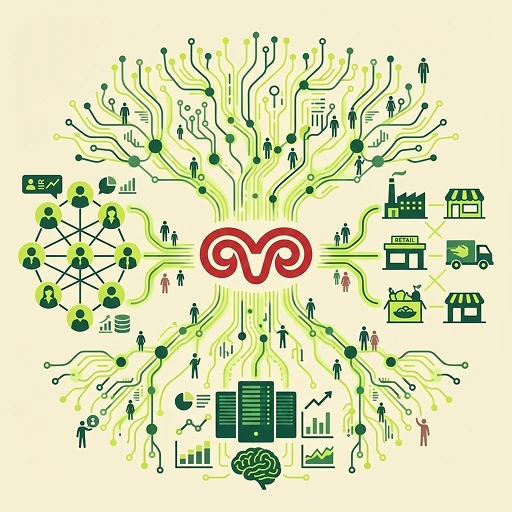
The Shared Lesson
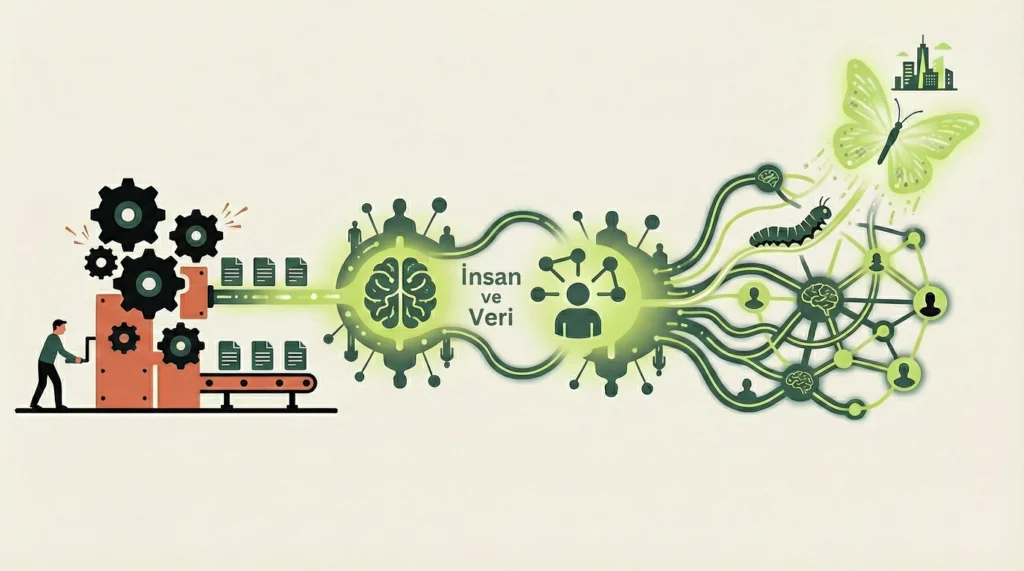
These three examples clearly show: Winners are those who treat AI not as an add-on that speeds up the current structure, but as an infrastructure that strengthens the organization’s reflexes.
As Thomas C. Redman notes in his book “People and Data” (referencing Data Driven concepts), there are immense opportunities for companies that grasp that data is a team sport and fully include the data generation process in the workflow.
Those who optimize the machine gain efficiency. Those who transform the organism gain the future.
It is highly probable that companies succeeding in transforming their business by placing People and Data at the center will transform from caterpillars into butterflies, while other companies that remain spectators to this transformation will experience a “Kodak moment.”
Part 5: The Roadmap: How Do We Start?
Whether your company is small or large, there are 5 steps you need to take. Here is the prescription:
Step 1: Change the Vision (AI is Not a Toy)
Do not see AI as “IT’s job.” This is the CEO’s job. You are going to replace the company’s engine with AI.
Step 2: Manage Tasks, Not Job Descriptions
Apply the 3-step prescription suggested by Stephen Wunker:
Think Task-Based: Don’t ask, “What does a Marketing Manager do?” Ask, “What are the concrete tasks that need to be done in the marketing department?” and split these tasks into their atoms.
Distribute Intelligence: Which tasks can be completely delegated to AI (arms), and in which is the human (central brain) touch essential? Clarify this distinction.
Redesign Roles: What new competencies does your team need after AI integration? Promote your people from “doing the work” to “managing and supervising the work.”
Step 3: Clean Your Data (RAG Architecture)
“Garbage in, garbage out.” Clean your company’s memory (reports, emails, customer records) and make it readable for AI. This is called “RAG” (Retrieval-Augmented Generation). Thus, AI gives you not a generic Wikipedia answer, but an answer suitable to your company’s reality.
Step 4: Turn Your Employees into Heroes
Allow even employees who don’t know coding to build their own “AI Assistants.” OpenAI says that employees who do this do their jobs with passion and take off.
Step 5: Set the Rules but Don’t Scare
Do not let go of supervision while giving authority to agents. But don’t let this supervision slow down the work; let it be a part of the work.
Conclusion: Either Change or Become History
Drucker’s legacy is clearer today than ever: The task of management is not to control people, but to unleash the organization’s hidden capacity. AI is not just a technology that enlarges this capacity; when used correctly, it is a strategic lever.
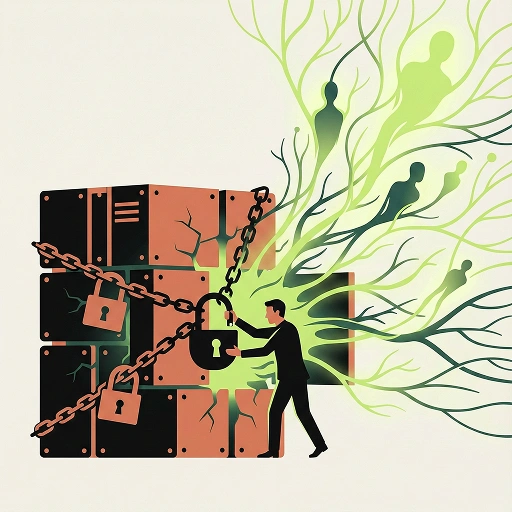
The message for 2026 and beyond is very clear: Not the biggest, but the fastest to adapt will survive.
Stop seeing your company as a cold machine made of gears. Rebuild it as a living organism that feeds on data, thinks with AI, and breathes with its customer.
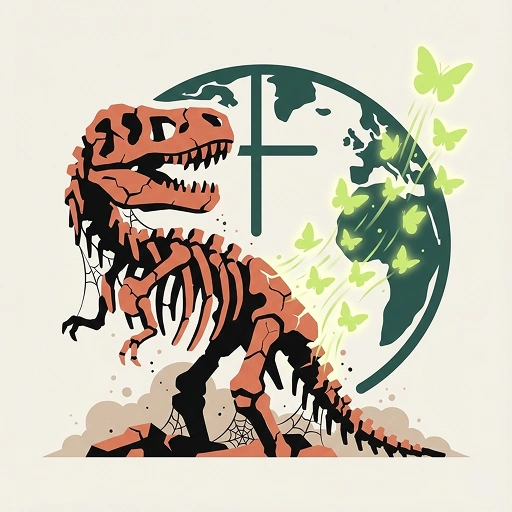
Remember; dinosaurs were big, but they went extinct because they couldn’t change. Butterflies look fragile, but they can migrate from one end of the world to the other. The choice is yours.
Özet Tablo: Kim Neyi Doğru/Yanlış Yaptı?
| Area | The Losers | The Winners | The Transformers | The Lesson |
| Sales / Access | Dependent on a single channel (e.g., Tupperware – home parties) | Everywhere: Digital + Physical (IonKraft) | Multi-channel, data-driven ecosystem (Amcor, Unilever) | Go where the customer is. |
| Tech Approach | No tech investment due to debt and cost pressure | Science and AI-based product innovation | Corporate architecture integrating AI into infrastructure | Innovation is not a luxury, it is a condition for survival. |
| Efficiency Model | Relying entirely on manpower | Human + Agent (AI) collaboration | Decision systems scaled by Human + AI | AI acts as a force multiplier for the workforce. |
| Organizational Structure | Cumbersome, slow, hierarchical | Agile and problem-oriented | Learning, adaptive, networked organization | The fast fish eats the big fish. |
| Role of Marketing | Sales support function | The power establishing product-market fit | Center for demand forecasting and decision support | Marketing is not communication; it is navigation. |
| Position of AI | Non-existent or too late | Tool providing competitive advantage | The nervous system of the organization | AI is not a tool, it is a strategic partner. |
| Adaptation to Future | Resistance to change | Clear solution to a clear problem | Continuous rebuild | The adaptable wins. |
Levent Yaralı
23.12.2025